
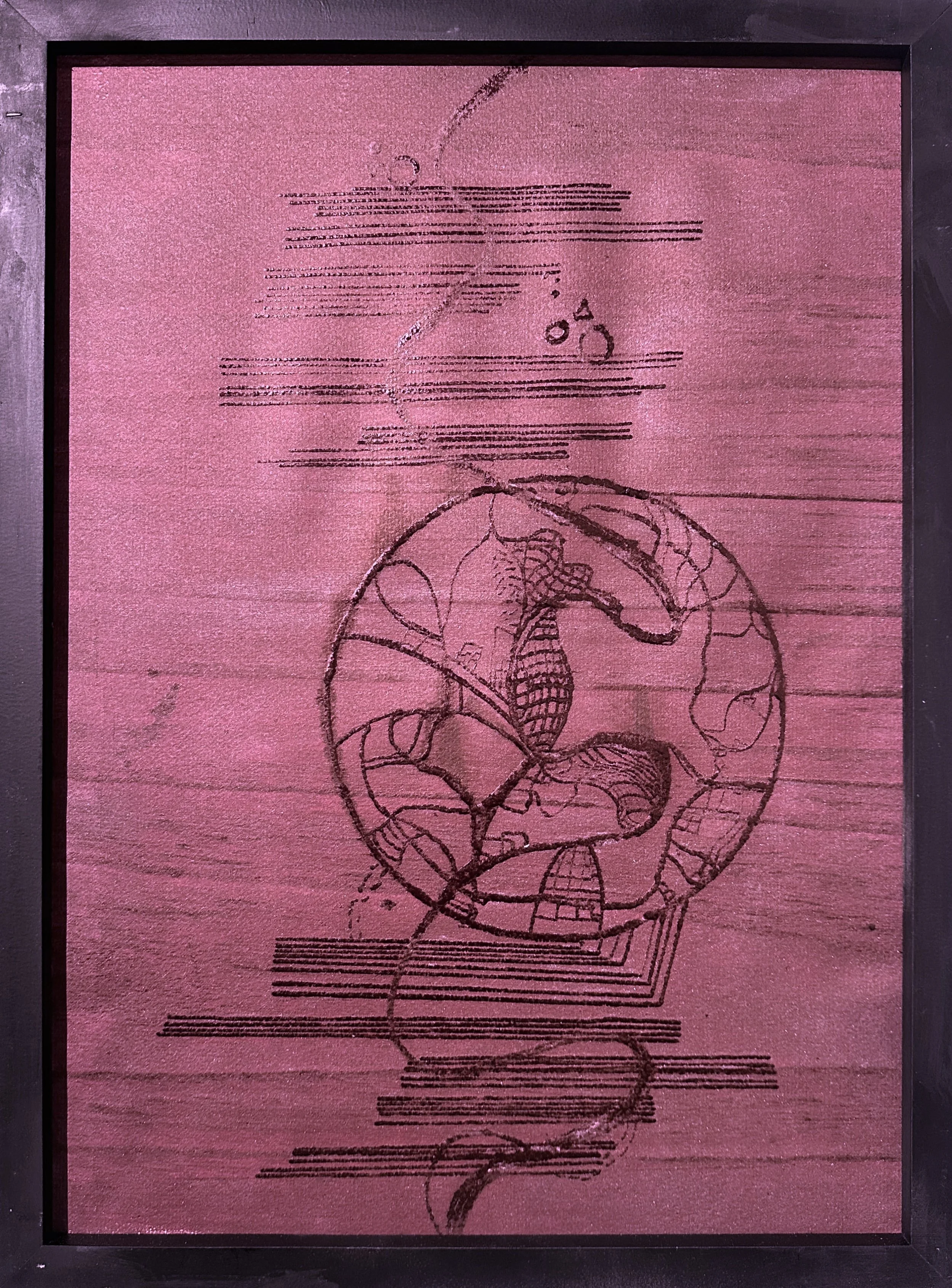
This work reflects a world structured by systems that prioritize individuality without fully accounting for the complexity of collective existence. Within a contained space, forms twist, overlap, and attempt to navigate one another, held inside a framework that both defines and limits their movement.
Interrupted lines move across the surface like signals, fragmented, repeated, and partially obscured, suggesting communication that is distorted, filtered, or incomplete. What should connect instead disrupts. What should clarify instead complicates.
There is a tension between autonomy and entanglement. Each form exists on its own terms, yet cannot escape its proximity to others, moving within systems that fail to support true understanding.
How can you ask me to explain myself… in a world that won’t let me fully exist?
In this way, the work becomes both a reflection and a confrontation, questioning the conditions under which identity is formed, expressed, and understood.
Engraving oil on paper
60 x 44 cm | 23.62 x 17.32 in
Delivery details will be sent privately to each buyer.
Taxes, shipping and handling is not included.
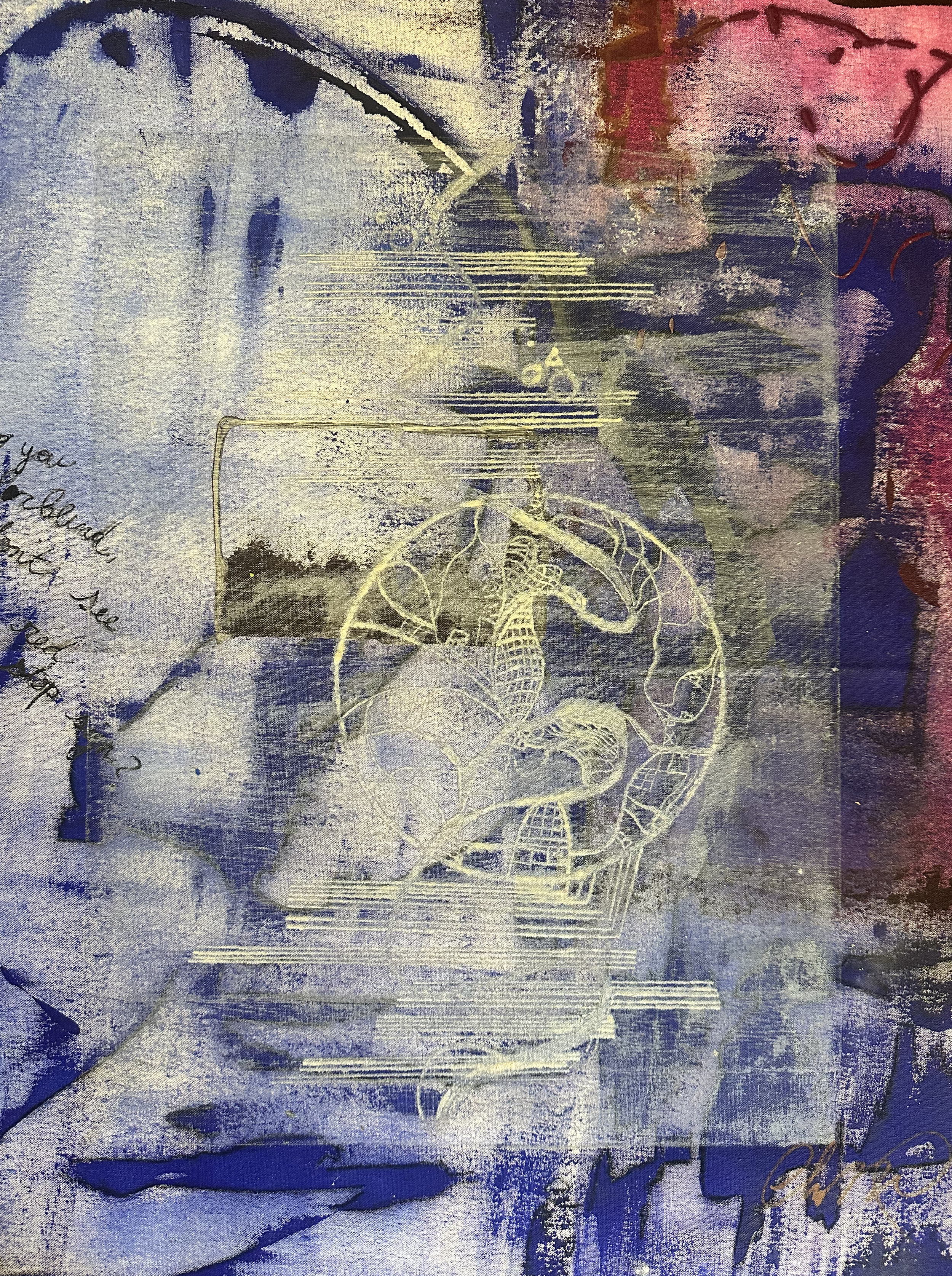
This work reflects a world structured by systems that prioritize individuality without fully accounting for the complexity of collective existence. Within a contained space, forms twist, overlap, and attempt to navigate one another, held inside a framework that both defines and limits their movement.
Interrupted lines move across the surface like signals, fragmented, repeated, and partially obscured, suggesting communication that is distorted, filtered, or incomplete. What should connect instead disrupts. What should clarify instead complicates.
There is a tension between autonomy and entanglement. Each form exists on its own terms, yet cannot escape its proximity to others, moving within systems that fail to support true understanding.
How can you ask me to explain myself… in a world that won’t let me fully exist?
In this way, the work becomes both a reflection and a confrontation, questioning the conditions under which identity is formed, expressed, and understood.
Engraving oil on paper
77 x 57 cm | 30.31 x 22.44 in
Delivery details will be sent privately to each buyer.
Taxes, shipping and handling is not included.
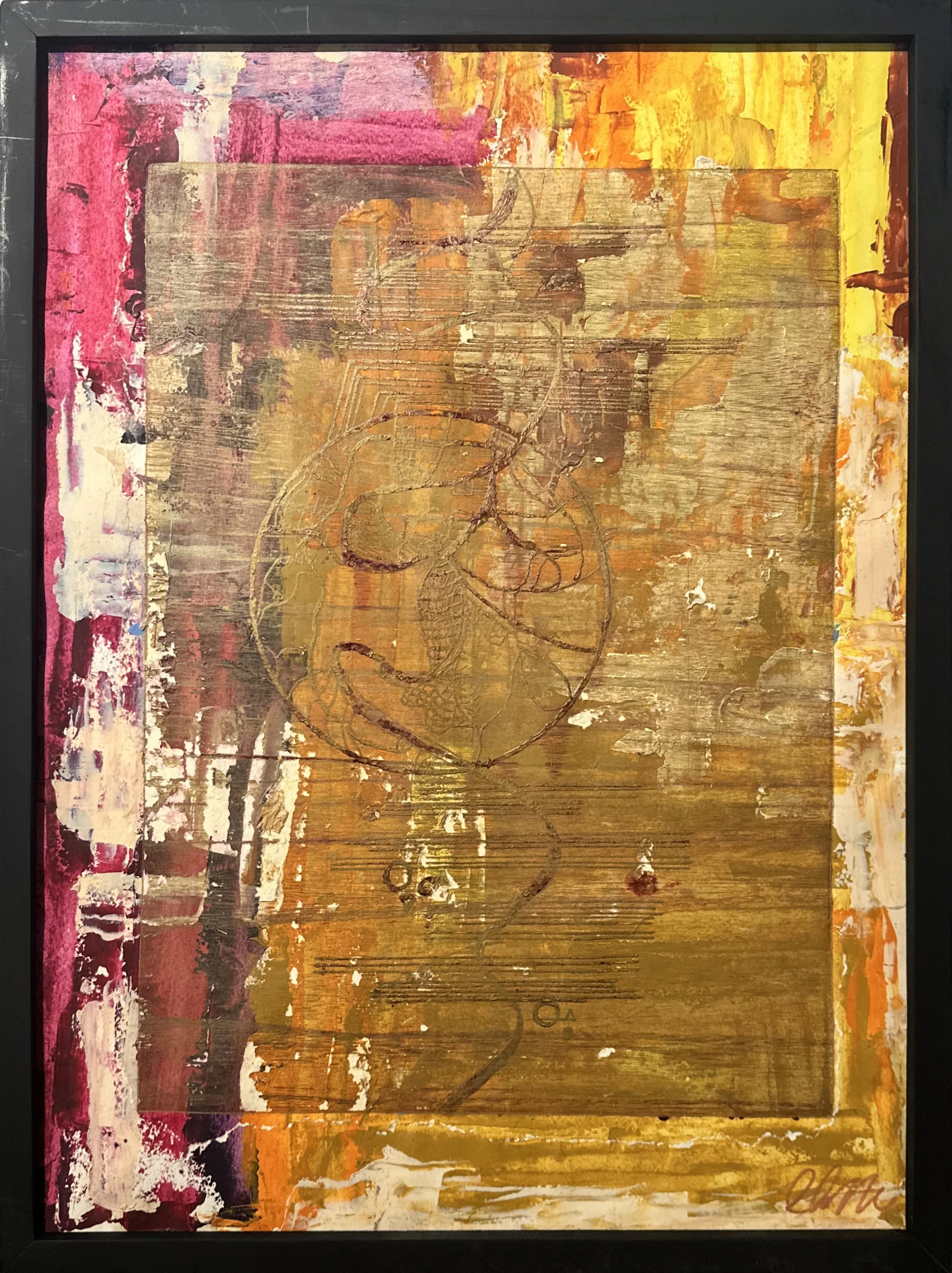
This work reflects a world structured by systems that prioritize individuality without fully accounting for the complexity of collective existence. Within a contained space, forms twist, overlap, and attempt to navigate one another, held inside a framework that both defines and limits their movement.
Interrupted lines move across the surface like signals, fragmented, repeated, and partially obscured, suggesting communication that is distorted, filtered, or incomplete. What should connect instead disrupts. What should clarify instead complicates.
There is a tension between autonomy and entanglement. Each form exists on its own terms, yet cannot escape its proximity to others, moving within systems that fail to support true understanding.
How can you ask me to explain myself… in a world that won’t let me fully exist?
In this way, the work becomes both a reflection and a confrontation, questioning the conditions under which identity is formed, expressed, and understood.
Engraving oil on paper
77 x 57 cm | 30.31 x 22.44 in
Delivery details will be sent privately to each buyer.
Taxes, shipping and handling is not included.
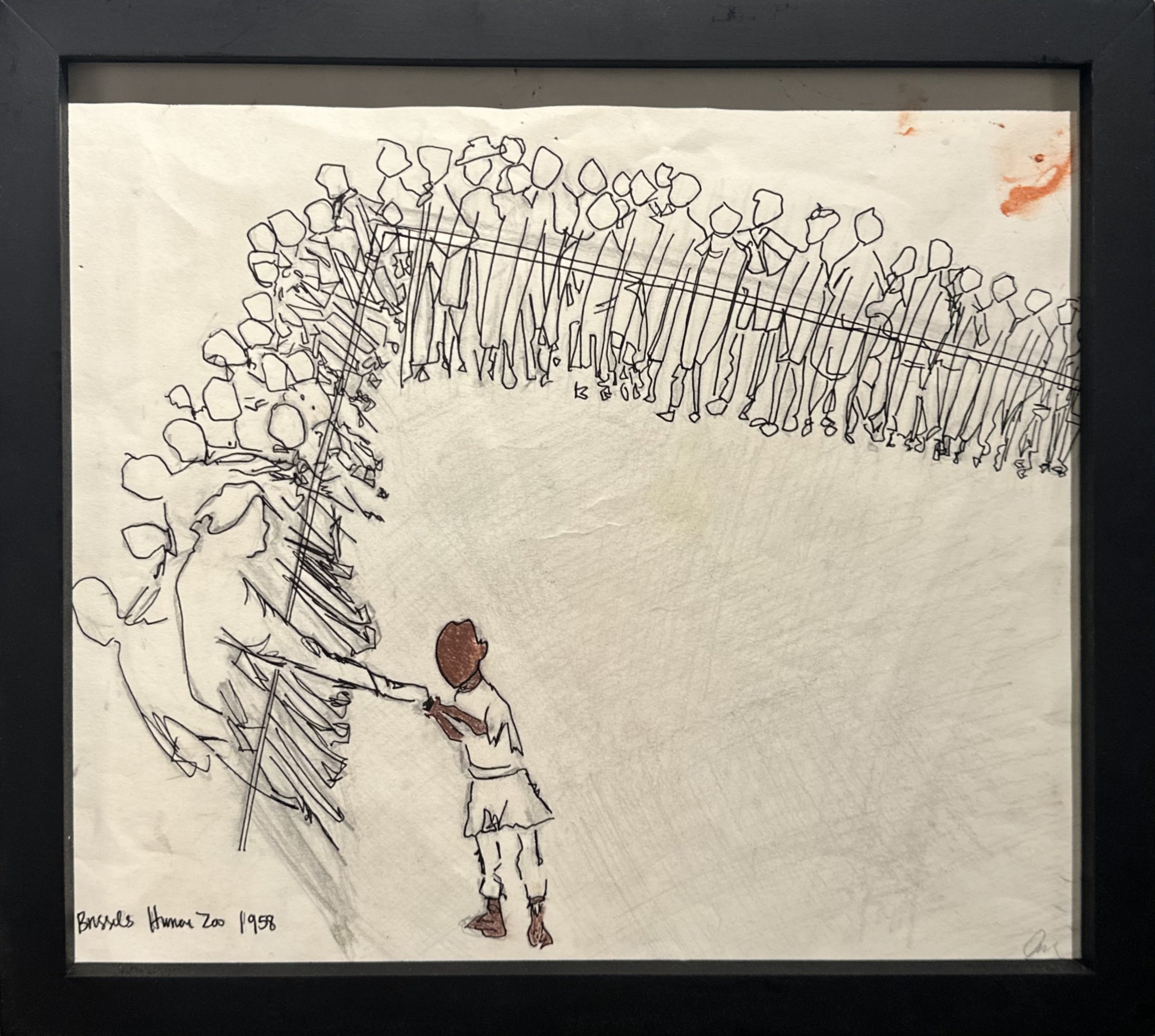
This work reflects a world structured by systems that prioritize individuality without fully accounting for the complexity of collective existence. Within a contained space, forms twist, overlap, and attempt to navigate one another, held inside a framework that both defines and limits their movement.
Interrupted lines move across the surface like signals, fragmented, repeated, and partially obscured, suggesting communication that is distorted, filtered, or incomplete. What should connect instead disrupts. What should clarify instead complicates.
There is a tension between autonomy and entanglement. Each form exists on its own terms, yet cannot escape its proximity to others, moving within systems that fail to support true understanding.
How can you ask me to explain myself… in a world that won’t let me fully exist?
In this way, the work becomes both a reflection and a confrontation, questioning the conditions under which identity is formed, expressed, and understood.
Coloured pencil on paper
35 x 39 cm | 13.78 x 15.35 in
Delivery details will be sent privately to each buyer.
Taxes, shipping and handling is not included.
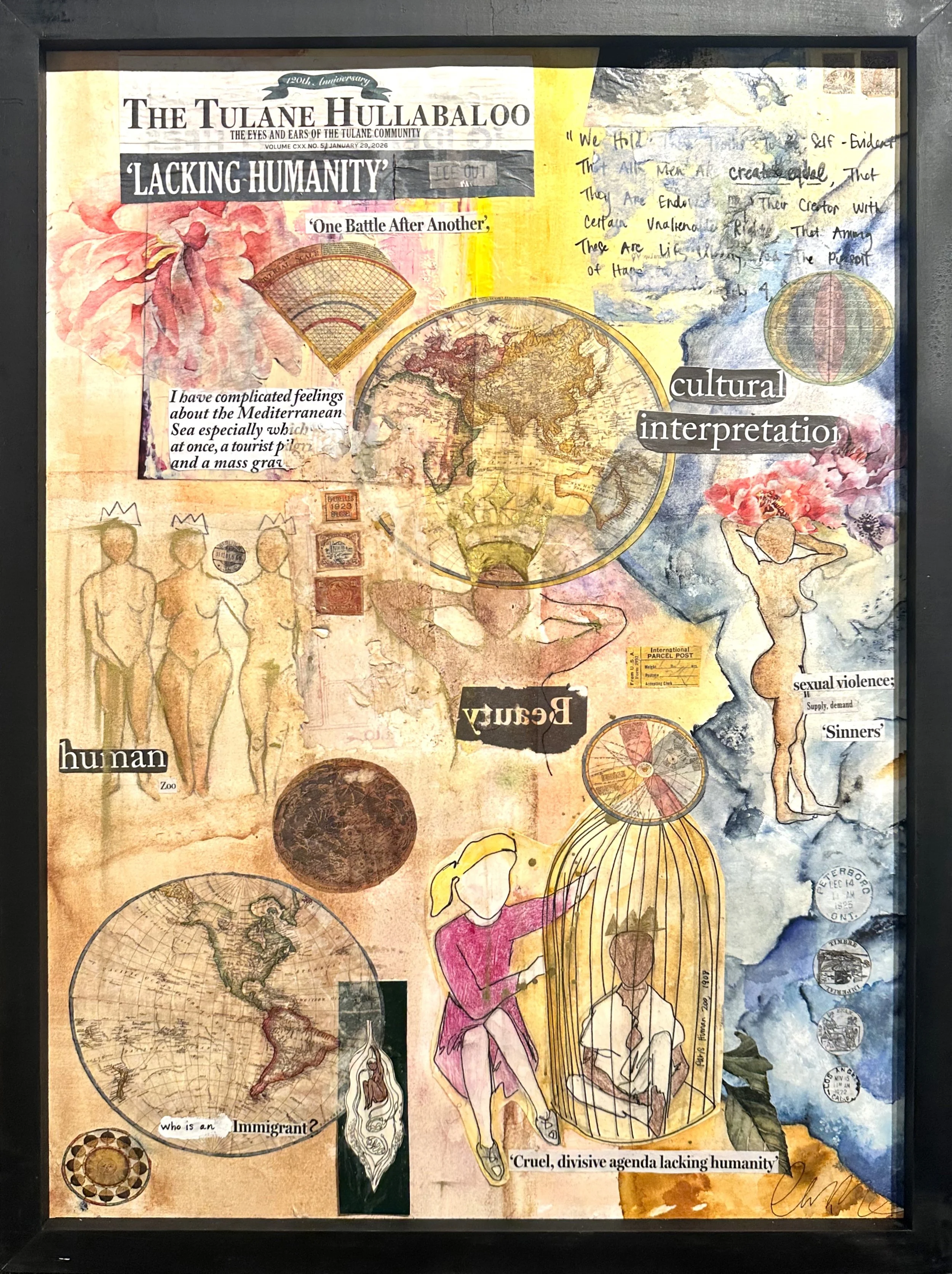
Drawing on archival material from so-called “human zoos” presented across Europe in the late 19th and early 20th centuries, including sites in Italy, France, and Belgium, History Does Not Repeat Itself, But It Often Rhymes confronts the systematic exhibition and objectification of non-European bodies within colonial frameworks of display.
The work incorporates visual references to documented cases in which individuals from regions such as the Philippines, Ghana, and the United States were presented as spectacles for public viewing. By recontextualising these histories, Meshel exposes the mechanisms through which bodies were categorised, racialised, and consumed under the guise of education or entertainment.
Central to the composition is the representation of women whose images are drawn from archival sources. Their bodies, often displayed in states of imposed nudity, reflect the ways in which physical difference was exaggerated and fetishised to reinforce colonial hierarchies and narratives of otherness. In this context, the act of display becomes inseparable from systems of control and dehumanisation.
The work extends beyond historical reference, establishing a parallel with contemporary structures of confinement and surveillance, particularly within immigration detention systems. Without collapsing distinctions between past and present, Meshel suggests a continuity in the visual and political logic that governs how certain bodies are seen, managed, and contained.
Rather than presenting history as a closed chapter, the piece insists on its persistence, asking viewers to consider not only what has been documented, but how similar patterns continue to shape present realities. In doing so, it frames history not as repetition, but as resonance, where past structures echo within contemporary forms.
Collage, watercolor, coloured pencils, gold ink, pencil
70 x 51 cm | 27.56 x 20.08 in
Delivery details will be sent privately to each buyer.
Taxes, shipping and handling is not included.
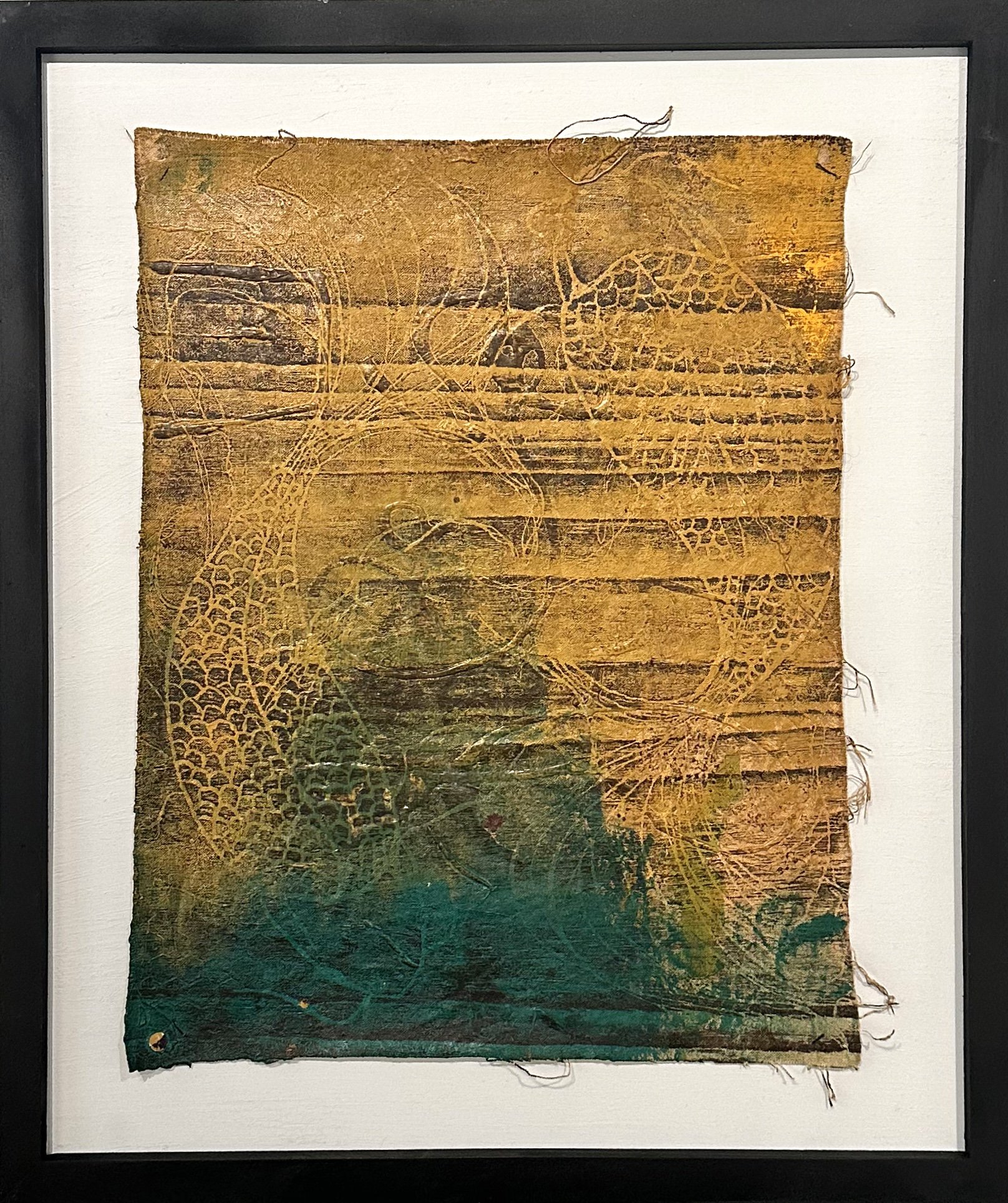
These works hold a sense of place, of Mississippi, of memory, of survival shaped by land and history. The fish, often understood as existing at the bottom, are reimagined here in motion, elevated, circling, and in quiet dialogue with one another.
Set against a surface that recalls earth, sediment, and time, the figures emerge as both form and memory, traced rather than fixed, present yet continually shifting.
There is a transformation at play. What has been historically dismissed or overlooked is not only reclaimed, but honored. Through process and material, the work reflects a lineage of making, of taking what was given and creating something sustaining, something meaningful, something whole.
In this way, the work becomes an offering of gratitude to Mississippi, to a history of survival, ingenuity, and the quiet alchemy of making gold anyway.
Engraving on canvas
52 x 40 cm | 20.47 x 15.75 in
Delivery details will be sent privately to each buyer.
Taxes, shipping and handling is not included.
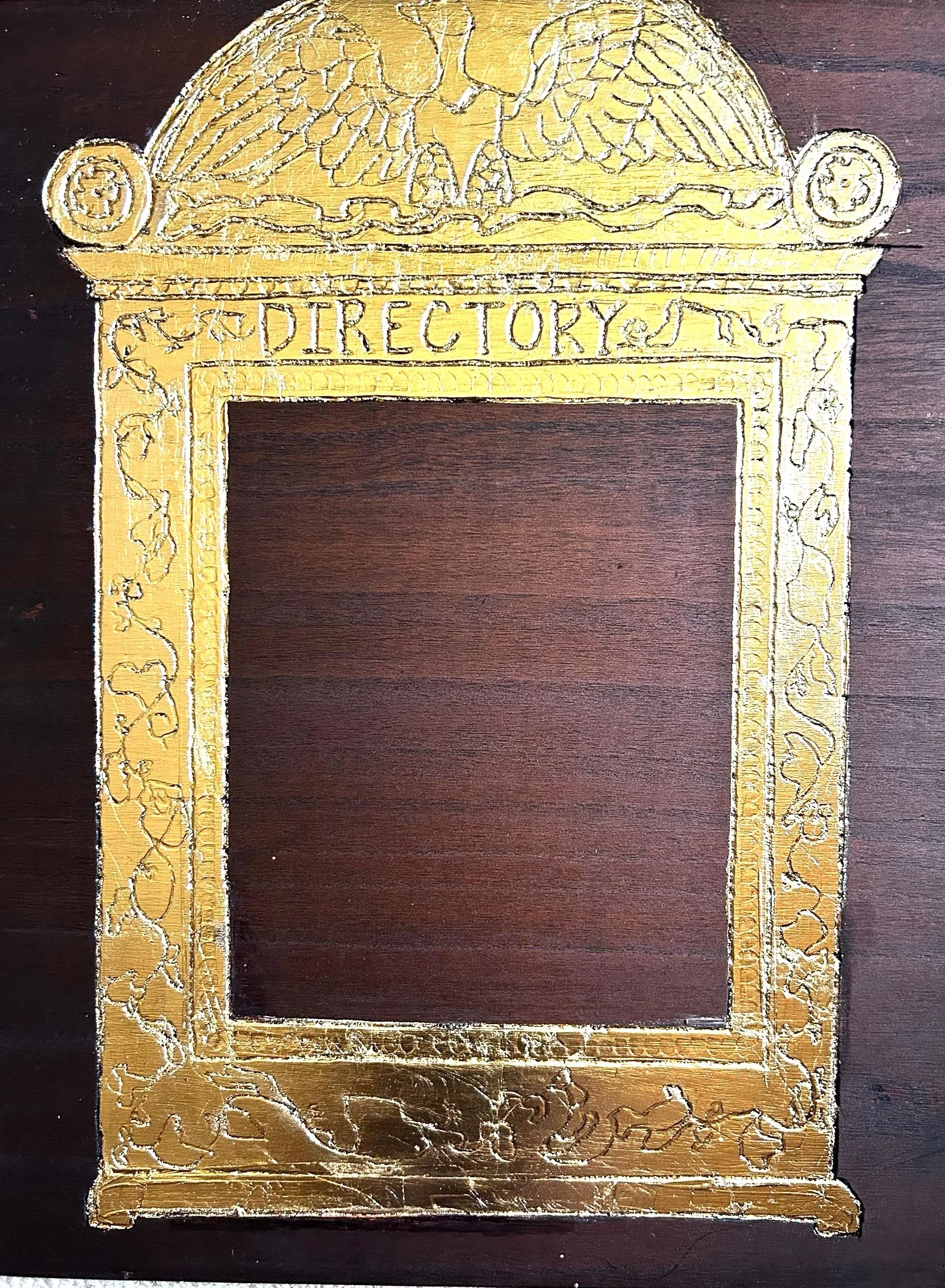
This work draws directly from the directory of the Fifth Circuit Court of Appeals, a structure that organizes authority, names, and hierarchy within the legal system. Recreated through engraving and gilding, the piece mirrors the visual language of institutional power while shifting its context and meaning.
The bald eagle, a symbol of American identity and dominance, sits prominently above the frame. Yet the ornate detailing and gold surface point beyond a singular origin, referencing traditions of gilding and craftsmanship that extend across cultures and histories. What appears distinctly American is, in part, constructed from borrowed forms.
By isolating and reconstructing this object, the work questions how authority is framed, preserved, and presented. The directory, typically filled with names and positions, is rendered empty, inviting reflection on who is included, who is omitted, and how systems assign visibility and value.
Through this act of translation, the piece holds a tension between reverence and critique. It reflects on the aesthetics of power while quietly destabilizing it, revealing that even the most fixed structures are built, layered, and open to reinterpretation.
Ink on engraved wood plate
60 x 45 cm | 23.62 x 17.72 in
Delivery details will be sent privately to each buyer.
Taxes, shipping and handling is not included.
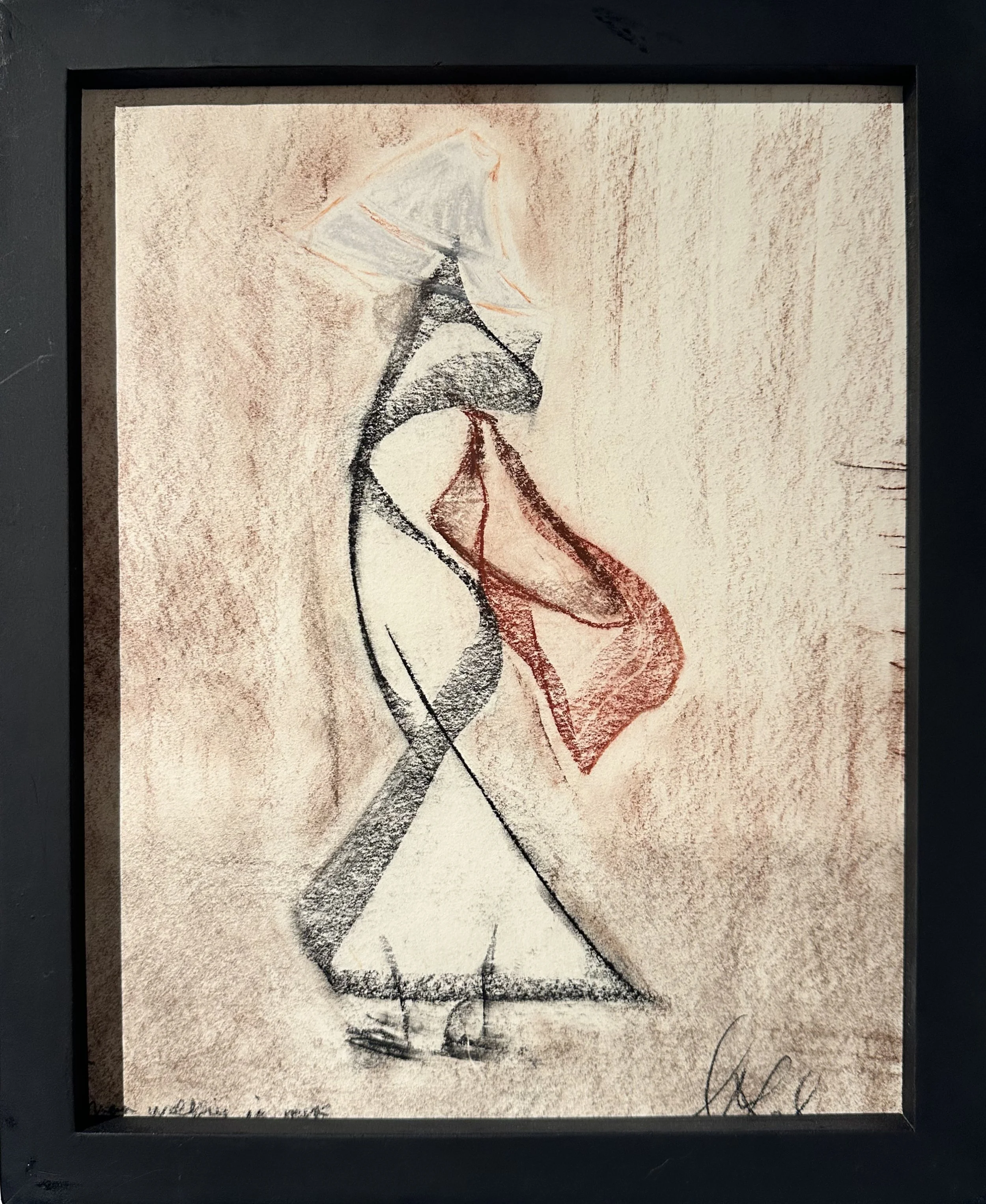
This work emerges from Meshel’s reflection on how Black bodies are perceived within an international context, particularly in relation to visibility, movement, and autonomy. In contrast to imposed narratives shaped by observation and categorisation, the drawings propose an alternative: bodies defined through their own rhythm, presence, and self-determined expression.
Free Soul, Free to Roam is inspired by a fleeting encounter in public space, capturing the movement of a figure whose gestures convey a sense of freedom and immediacy. Rather than focusing on identity as a fixed construct, the work centres on motion itself—on the ability to occupy space without restriction, to move without being contained or interpreted through external frameworks.
Together with The Three Sisters, the works articulate a vision of Black embodiment that resists limitation. Movement is positioned as both a physical and conceptual act, one that affirms presence, multiplicity, and the possibility of existing beyond prescribed roles or expectations.
Coloured pencil on paper
34 x 28 cm | 13.39 x 11.02 in
Delivery details will be sent privately to each buyer.
Taxes, shipping and handling is not included.
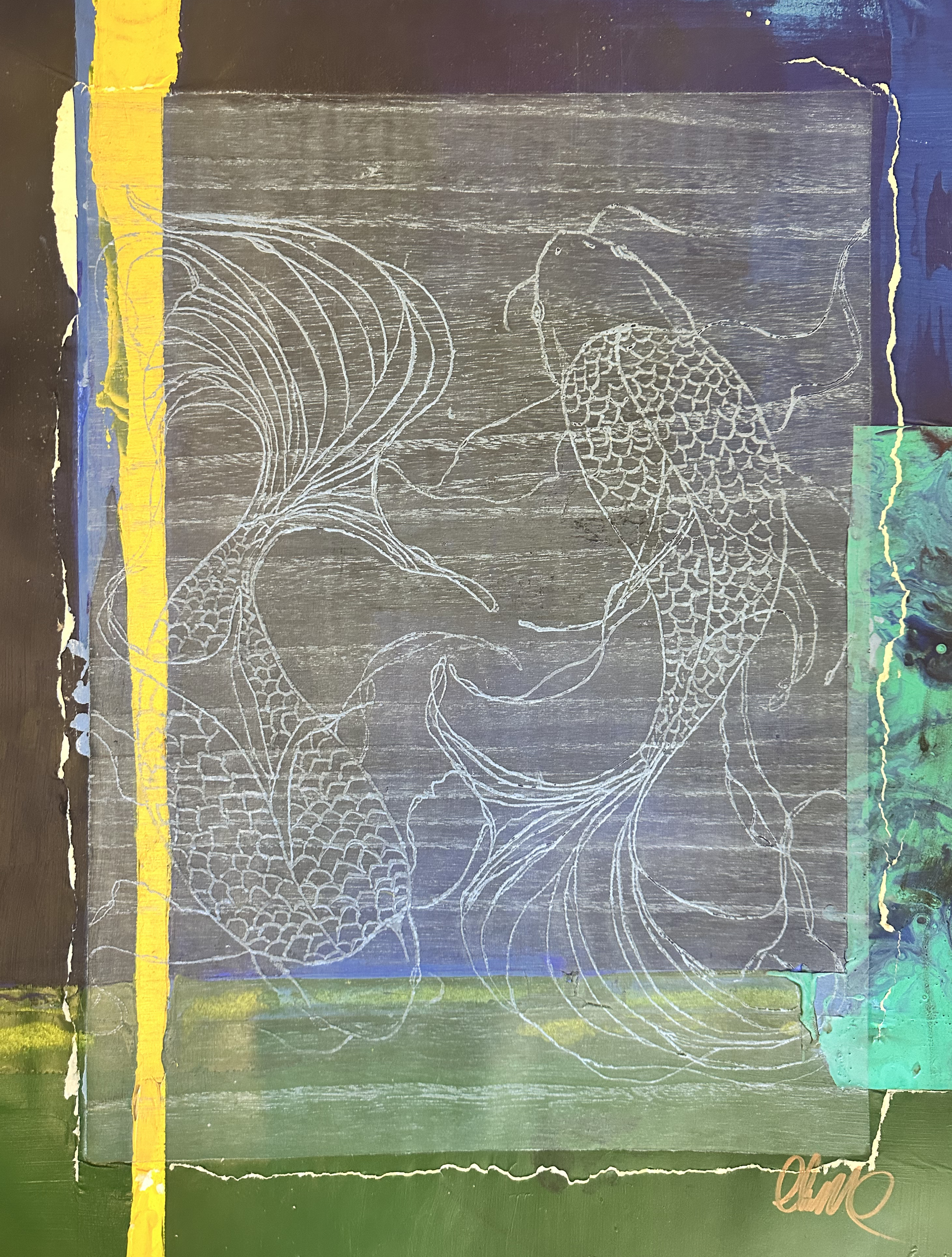
These works hold a sense of place, of Mississippi, of memory, of survival shaped by land and history. The fish, often understood as existing at the bottom, are reimagined here in motion, elevated, circling, and in quiet dialogue with one another.
Set against a surface that recalls earth, sediment, and time, the figures emerge as both form and memory, traced rather than fixed, present yet continually shifting.
There is a transformation at play. What has been historically dismissed or overlooked is not only reclaimed, but honored. Through process and material, the work reflects a lineage of making, of taking what was given and creating something sustaining, something meaningful, something whole.
In this way, the work becomes an offering of gratitude to Mississippi, to a history of survival, ingenuity, and the quiet alchemy of making gold anyway.
Engraving, acrylic and oil on paper
77 x 56 cm | 30.31 x 22.05 in
Delivery details will be sent privately to each buyer.
Taxes, shipping and handling is not included.
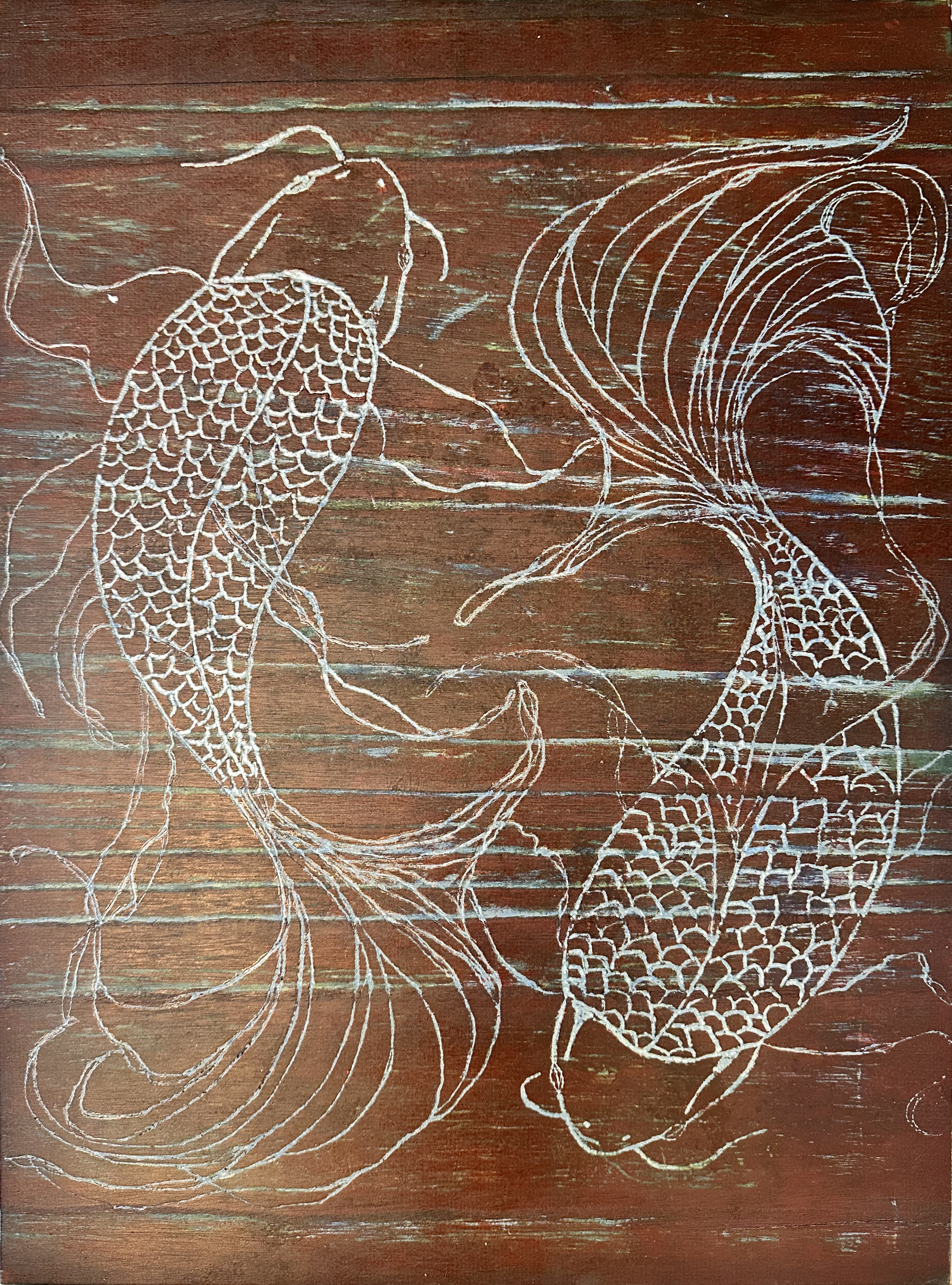
These works hold a sense of place, of Mississippi, of memory, of survival shaped by land and history. The fish, often understood as existing at the bottom, are reimagined here in motion, elevated, circling, and in quiet dialogue with one another.
Set against a surface that recalls earth, sediment, and time, the figures emerge as both form and memory, traced rather than fixed, present yet continually shifting.
There is a transformation at play. What has been historically dismissed or overlooked is not only reclaimed, but honored. Through process and material, the work reflects a lineage of making, of taking what was given and creating something sustaining, something meaningful, something whole.
In this way, the work becomes an offering of gratitude to Mississippi, to a history of survival, ingenuity, and the quiet alchemy of making gold anyway.
Ink on engraved wood plate
23.82 x 17.72 in | 60.5 x 45 cm
Delivery details will be sent privately to each buyer.
Taxes, shipping and handling is not included.
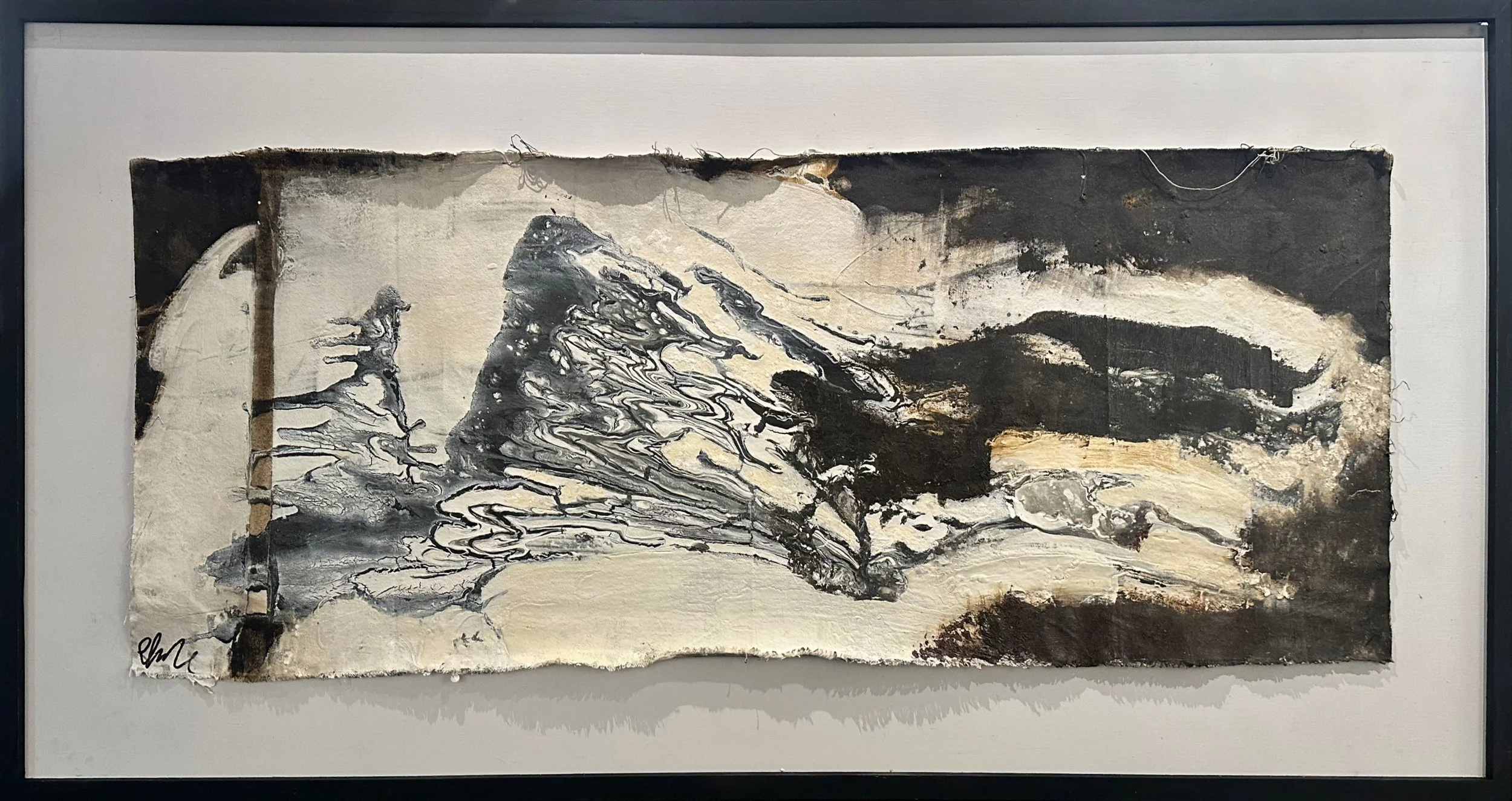
Presented as a paired work, Between Waters and What the River Took draw on aerial views of dried riverbeds, translating their branching, root-like formations into a visual language of connection, movement, and transformation. Across both compositions, Meshel engages with natural systems shaped by flow and erosion, where lines expand, diverge, and trace the passage of time.
Together, the works explore the cyclical nature of water as both a generative and subtractive force. Between Waters reflects a state of transition, where movement, disappearance, and return coexist, positioning the riverbed as a site suspended between presence and absence. In contrast, What the River Took focuses on the aftermath of that movement, where erosion reveals what remains once the flow has receded, and absence becomes a record of what has passed.
A shared sense of directional ambiguity runs through both pieces. Areas of flat colour intersect with passages of fluid motion, resisting fixed orientation and challenging expectations of how movement should behave. In this way, Meshel proposes a non-linear understanding of flow, one that is adaptive, unpredictable, and unconstrained by imposed structures.
Originally presented in a previous exhibition, the works are reintroduced here within a context that more closely aligns with their conceptual concerns. As a diptych, they function as a reflection on interconnected systems, environmental cycles, and the tension between continuity and loss, inviting consideration of both what moves through a landscape and what it leaves behind.
Acrylic and oil on canvas
53 x 146 cm | 20.87 x 57.48 in
Delivery details will be sent privately to each buyer.
Taxes, shipping and handling is not included.
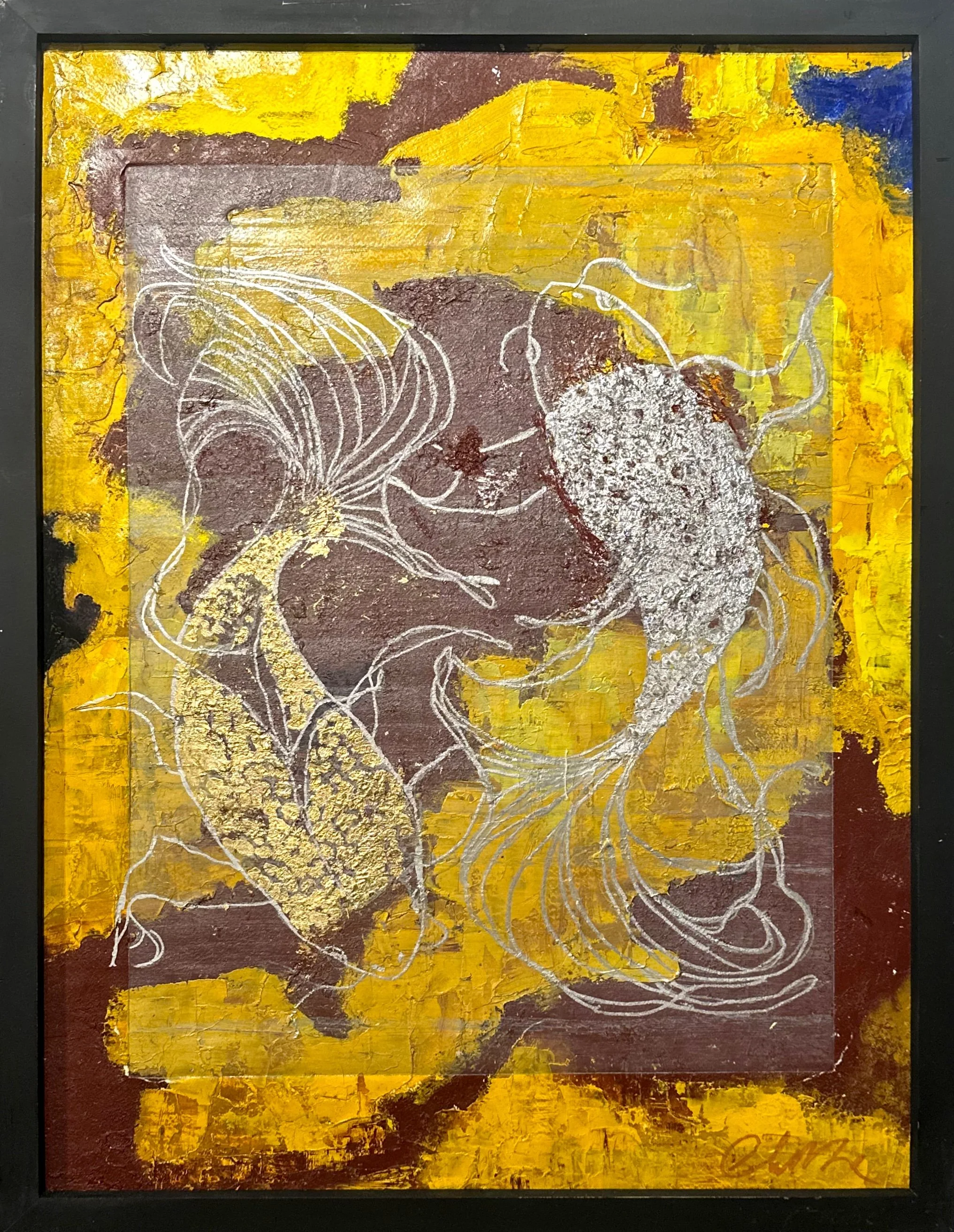
These works hold a sense of place, of Mississippi, of memory, of survival shaped by land and history. The fish, often understood as existing at the bottom, are reimagined here in motion, elevated, circling, and in quiet dialogue with one another.
Set against a surface that recalls earth, sediment, and time, the figures emerge as both form and memory, traced rather than fixed, present yet continually shifting.
There is a transformation at play. What has been historically dismissed or overlooked is not only reclaimed, but honored. Through process and material, the work reflects a lineage of making, of taking what was given and creating something sustaining, something meaningful, something whole.
In this way, the work becomes an offering of gratitude to Mississippi, to a history of survival, ingenuity, and the quiet alchemy of making gold anyway.
Engraving, gold leaf, and oil on paper
77 x 56 cm | 30.31 x 22.05 in
Delivery details will be sent privately to each buyer.
Taxes, shipping and handling is not included.
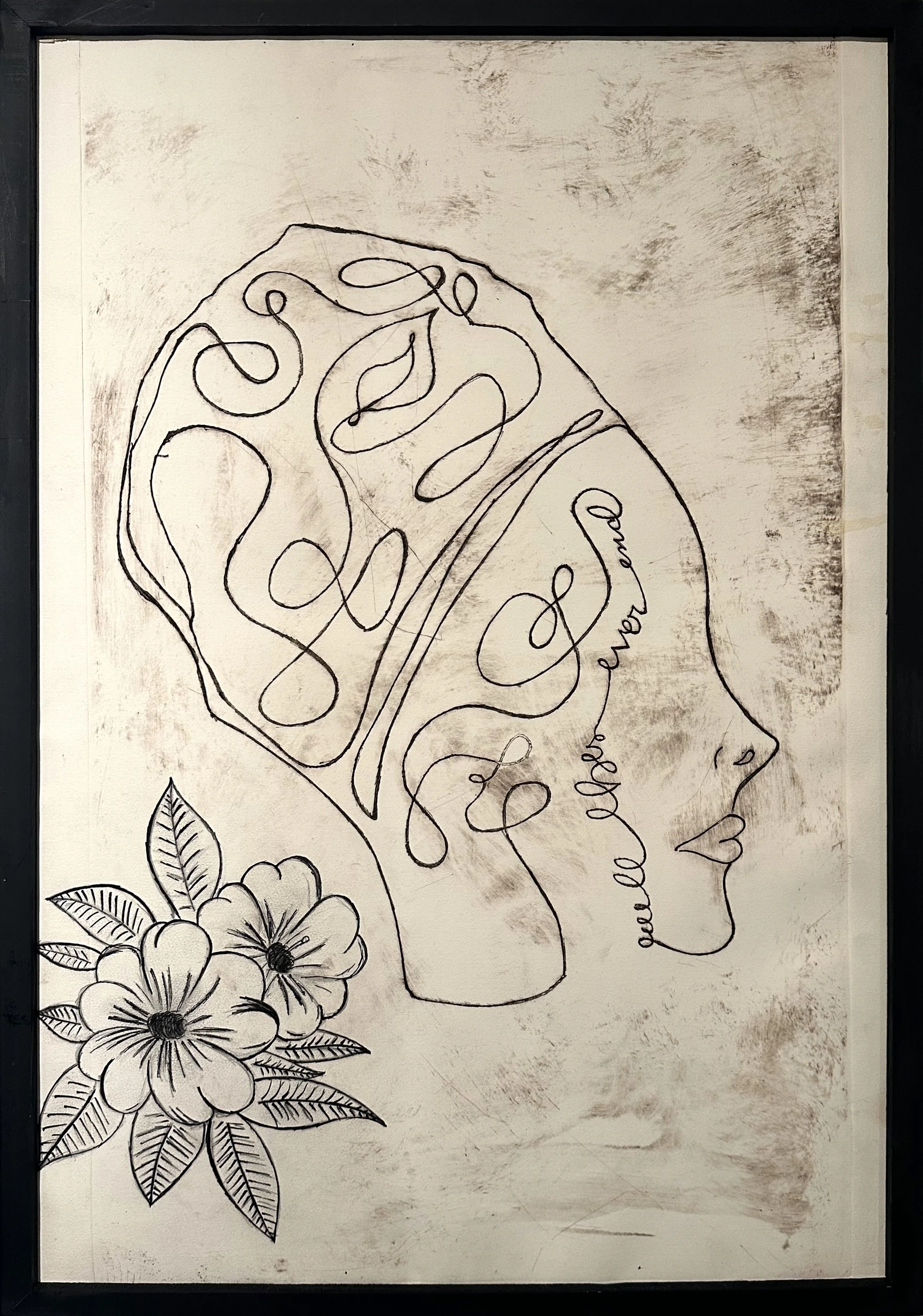
Created during an early period of transition and self-inquiry, Will This Ever End? emerges from an intuitive process of making rather than a predetermined concept. The original pattern was developed while Meshel was working on her previous body of work, The Body Keeps the Score, marking a moment in which the act of creation became a tool for self-recognition and affirmation.
Central to the work is Meshel’s first exploration of the one-line technique, executed without lifting the drawing instrument from the surface. This continuous gesture introduces both constraint and fluidity, requiring a sustained negotiation between control and release. The resulting composition records a process of endurance and attention, where the image unfolds through a single, uninterrupted movement.
Each version of the work brings together layered elements derived from engraved imagery, reworked into a new visual language. A secondary intervention introduces a collage variation, expanding the dialogue between repetition and transformation.
Engraving on paper
100 x 72 cm | 39.37 x 28.34 in
Delivery details will be sent privately to each buyer.
Taxes, shipping and handling is not included.
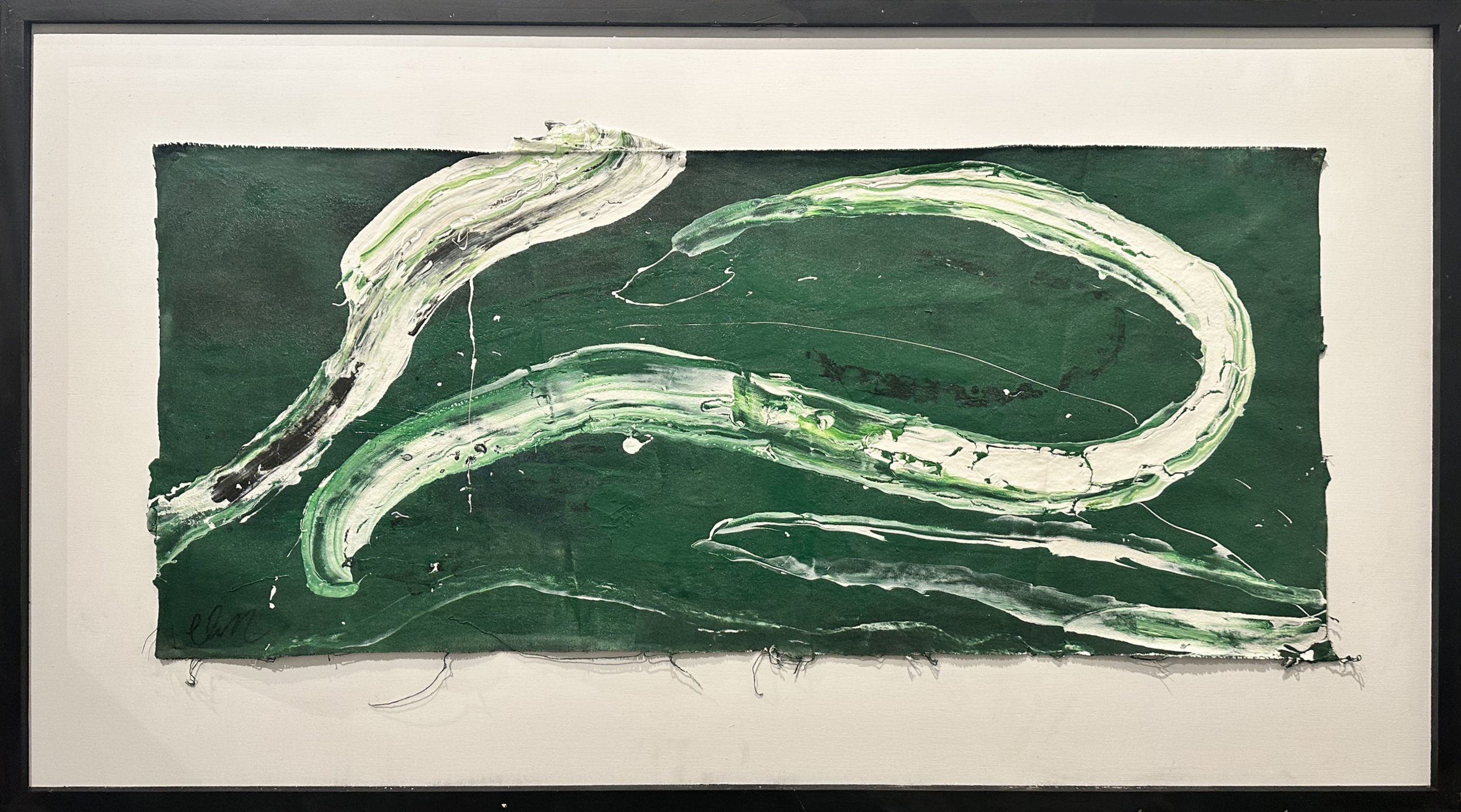
Presented as a paired work, Between Waters and What the River Took draw on aerial views of dried riverbeds, translating their branching, root-like formations into a visual language of connection, movement, and transformation. Across both compositions, Meshel engages with natural systems shaped by flow and erosion, where lines expand, diverge, and trace the passage of time.
Together, the works explore the cyclical nature of water as both a generative and subtractive force. Between Waters reflects a state of transition, where movement, disappearance, and return coexist, positioning the riverbed as a site suspended between presence and absence. In contrast, What the River Took focuses on the aftermath of that movement, where erosion reveals what remains once the flow has receded, and absence becomes a record of what has passed.
A shared sense of directional ambiguity runs through both pieces. Areas of flat colour intersect with passages of fluid motion, resisting fixed orientation and challenging expectations of how movement should behave. In this way, Meshel proposes a non-linear understanding of flow, one that is adaptive, unpredictable, and unconstrained by imposed structures.
Originally presented in a previous exhibition, the works are reintroduced here within a context that more closely aligns with their conceptual concerns. As a diptych, they function as a reflection on interconnected systems, environmental cycles, and the tension between continuity and loss, inviting consideration of both what moves through a landscape and what it leaves behind.
Acrylic on canvas
54 x 121 cm | 21.26 x 47.64 in
Delivery details will be sent privately to each buyer.
Taxes, shipping and handling is not included.
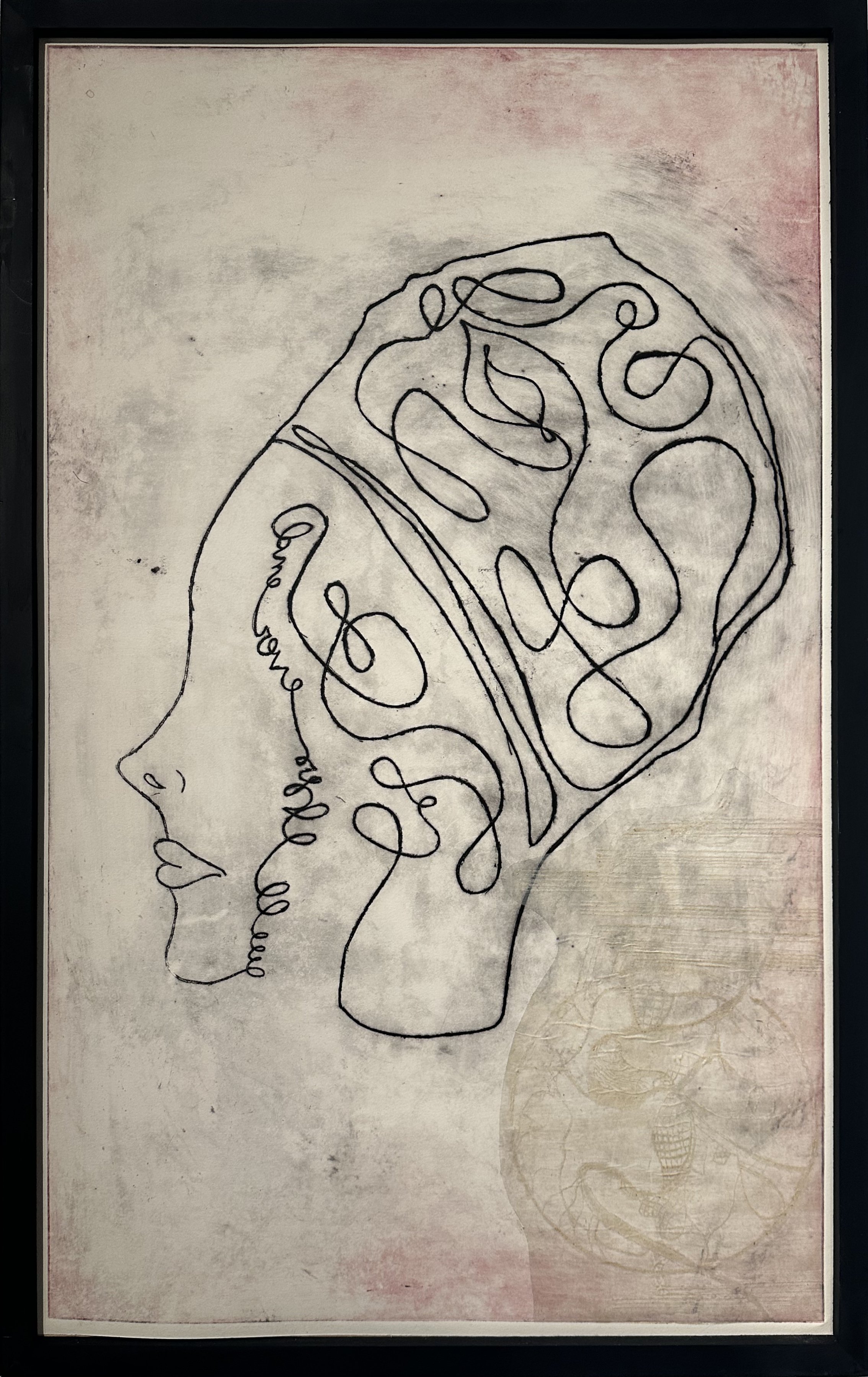
Created during an early period of transition and self-inquiry, Will This Ever End? emerges from an intuitive process of making rather than a predetermined concept. The original pattern was developed while Meshel was working on her previous body of work, The Body Keeps the Score, marking a moment in which the act of creation became a tool for self-recognition and affirmation.
Central to the work is Meshel’s first exploration of the one-line technique, executed without lifting the drawing instrument from the surface. This continuous gesture introduces both constraint and fluidity, requiring a sustained negotiation between control and release. The resulting composition records a process of endurance and attention, where the image unfolds through a single, uninterrupted movement.
Each version of the work brings together layered elements derived from engraved imagery, reworked into a new visual language. A secondary intervention introduces a collage variation, expanding the dialogue between repetition and transformation.
Engraving and collage on paper
102,5 x 62,5 cm | 39.37 x 23.62 in
Delivery details will be sent privately to each buyer.
Taxes, shipping and handling is not included.
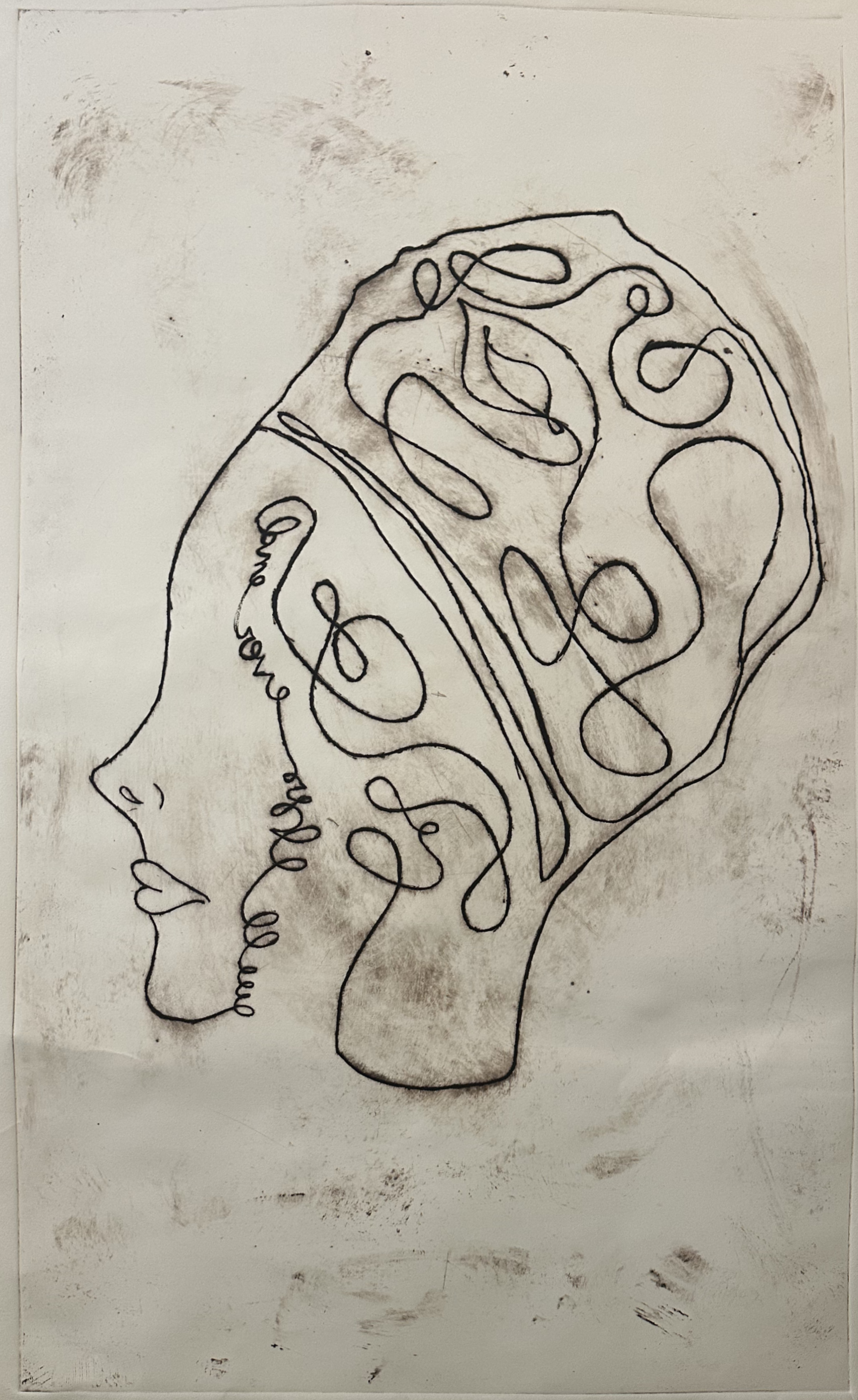
Created during an early period of transition and self-inquiry, Will This Ever End? emerges from an intuitive process of making rather than a predetermined concept. The original pattern was developed while Meshel was working on her previous body of work, The Body Keeps the Score, marking a moment in which the act of creation became a tool for self-recognition and affirmation.
Central to the work is Meshel’s first exploration of the one-line technique, executed without lifting the drawing instrument from the surface. This continuous gesture introduces both constraint and fluidity, requiring a sustained negotiation between control and release. The resulting composition records a process of endurance and attention, where the image unfolds through a single, uninterrupted movement.
Each version of the work brings together layered elements derived from engraved imagery, reworked into a new visual language. A secondary intervention introduces a collage variation, expanding the dialogue between repetition and transformation.
Engraving on paper
102,5 x 62,5 cm | 39.37 x 23.62 in
Delivery details will be sent privately to each buyer.
Taxes, shipping and handling is not included.
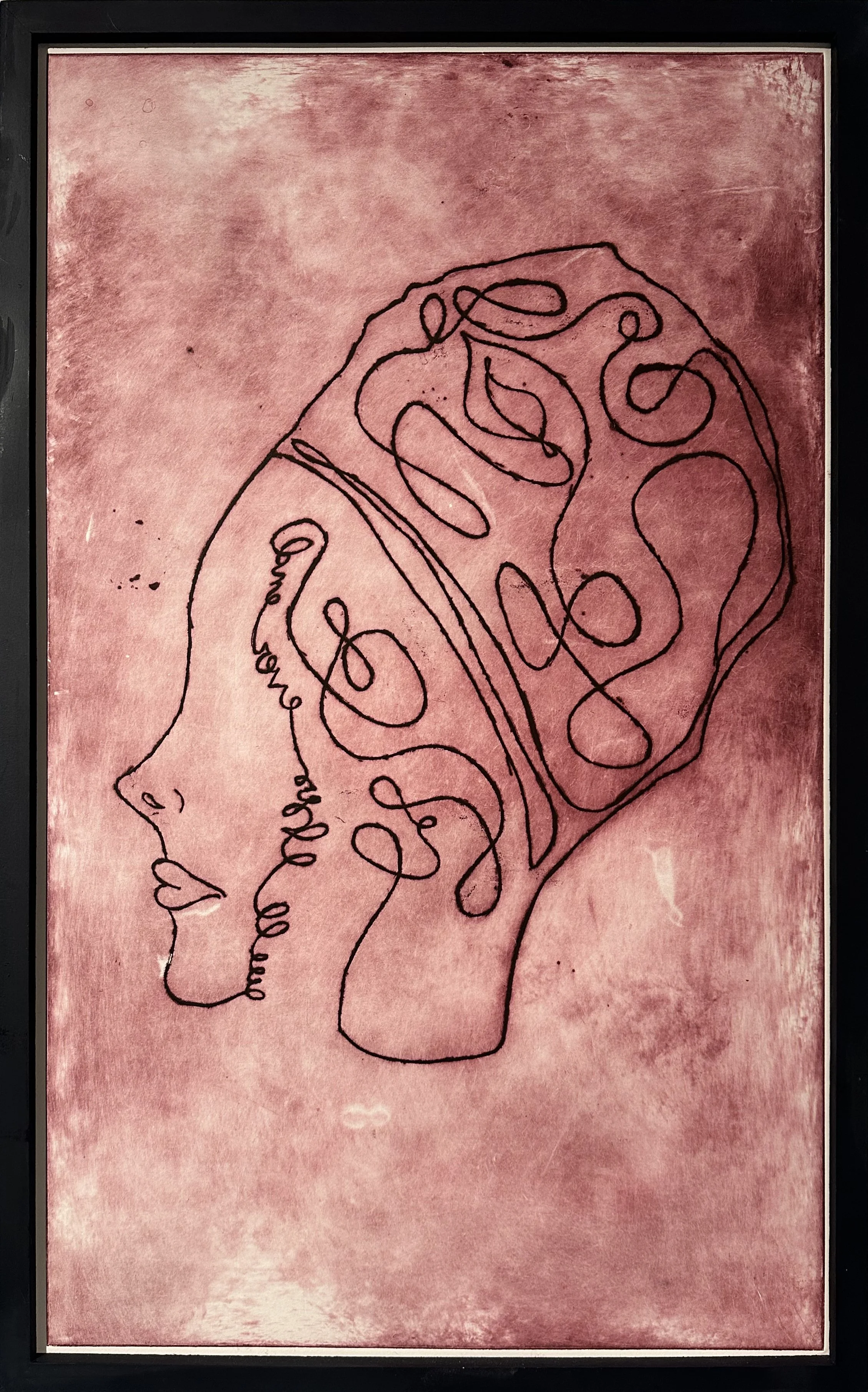
Created during an early period of transition and self-inquiry, Will This Ever End? emerges from an intuitive process of making rather than a predetermined concept. The original pattern was developed while Meshel was working on her previous body of work, The Body Keeps the Score, marking a moment in which the act of creation became a tool for self-recognition and affirmation.
Central to the work is Meshel’s first exploration of the one-line technique, executed without lifting the drawing instrument from the surface. This continuous gesture introduces both constraint and fluidity, requiring a sustained negotiation between control and release. The resulting composition records a process of endurance and attention, where the image unfolds through a single, uninterrupted movement.
Each version of the work brings together layered elements derived from engraved imagery, reworked into a new visual language. A secondary intervention introduces a collage variation, expanding the dialogue between repetition and transformation.
Engraving on paper
102,5 x 62,5 cm | 39.37 x 23.62 in
Delivery details will be sent privately to each buyer.
Taxes, shipping and handling is not included.
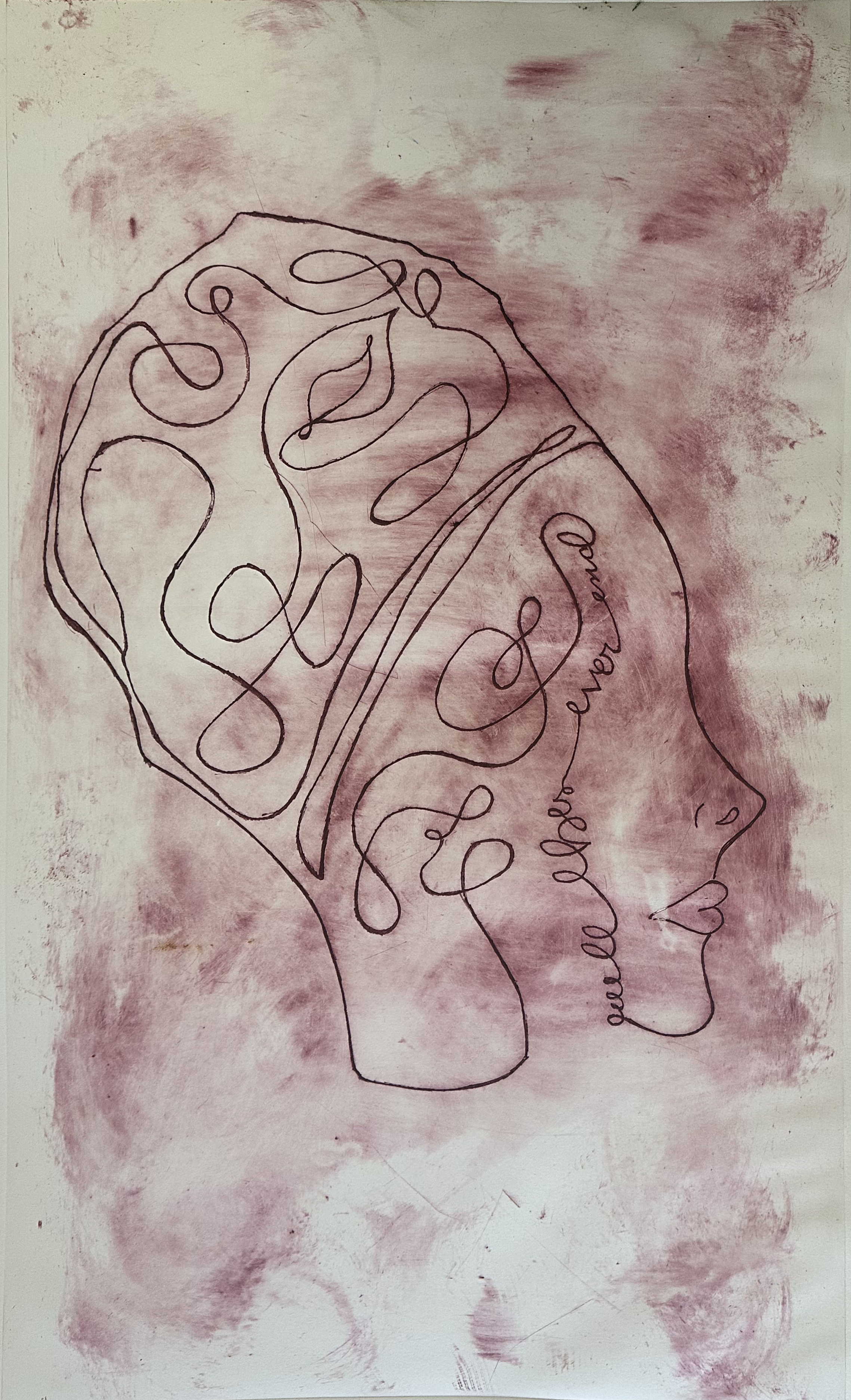
Created during an early period of transition and self-inquiry, Will This Ever End? emerges from an intuitive process of making rather than a predetermined concept. The original pattern was developed while Meshel was working on her previous body of work, The Body Keeps the Score, marking a moment in which the act of creation became a tool for self-recognition and affirmation.
Central to the work is Meshel’s first exploration of the one-line technique, executed without lifting the drawing instrument from the surface. This continuous gesture introduces both constraint and fluidity, requiring a sustained negotiation between control and release. The resulting composition records a process of endurance and attention, where the image unfolds through a single, uninterrupted movement.
Each version of the work brings together layered elements derived from engraved imagery, reworked into a new visual language. A secondary intervention introduces a collage variation, expanding the dialogue between repetition and transformation.
Engraving on paper
102,5 x 62,5 cm | 39.37 x 23.62 in
Delivery details will be sent privately to each buyer.
Taxes, shipping and handling is not included.
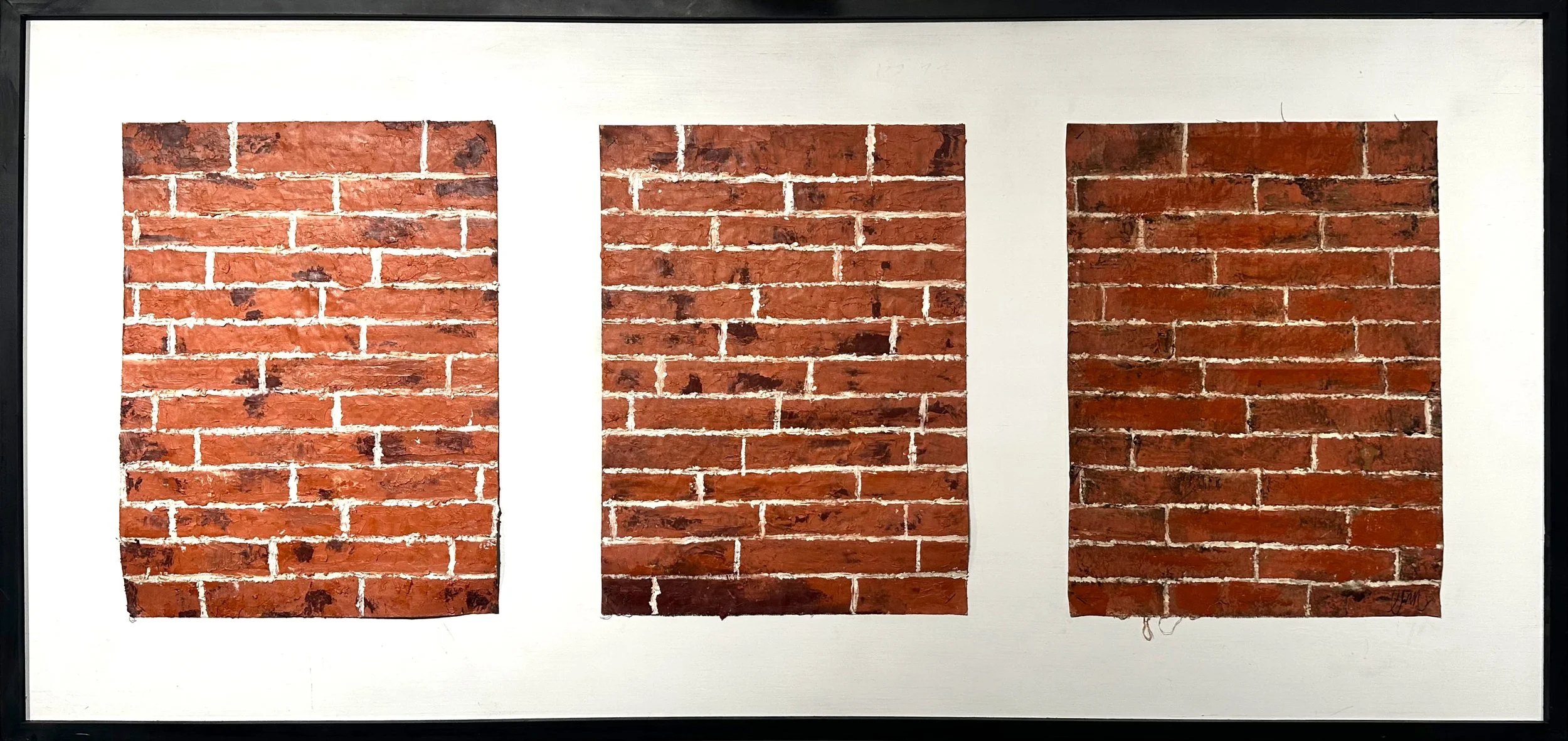
The Brick Wall originates from a period of interruption and withdrawal, initiated during a residency in Costa Rica undertaken at a moment of burnout. Removed from her usual environment and placed within an unfamiliar, remote landscape, Meshel’s engagement with the work began not through production, but through a return to material, specifically, the process of transforming raw red clay into a usable medium.
Although no artworks were completed during the residency itself, this encounter with the material became foundational. The red clay, sourced from Haco, Costa Rica, is later integrated directly into the surface of the piece, carrying with it the physical trace of that experience. Its presence establishes a dialogue between place and process, embedding the conditions of its discovery within the work.
This material gesture resonates with the artist’s upbringing in Mississippi, where red clay forms part of the local terrain and early memory. By reactivating this substance in a different geographical context, Meshel creates a tactile link between distant locations, connecting childhood experience with a later moment of disconnection and recovery.
The recurring brick-like structures that define the composition further anchor this connection, echoing the architecture of the artist’s childhood home. Through this convergence of material, memory, and form, The Brick Wall reflects on the ways in which personal history is carried, reassembled, and recontextualised across time and place.
Costarican clay on canvas
60 x 155 cm | 23.62 x 61.02 in
Delivery details will be sent privately to each buyer.
Taxes, shipping and handling is not included.
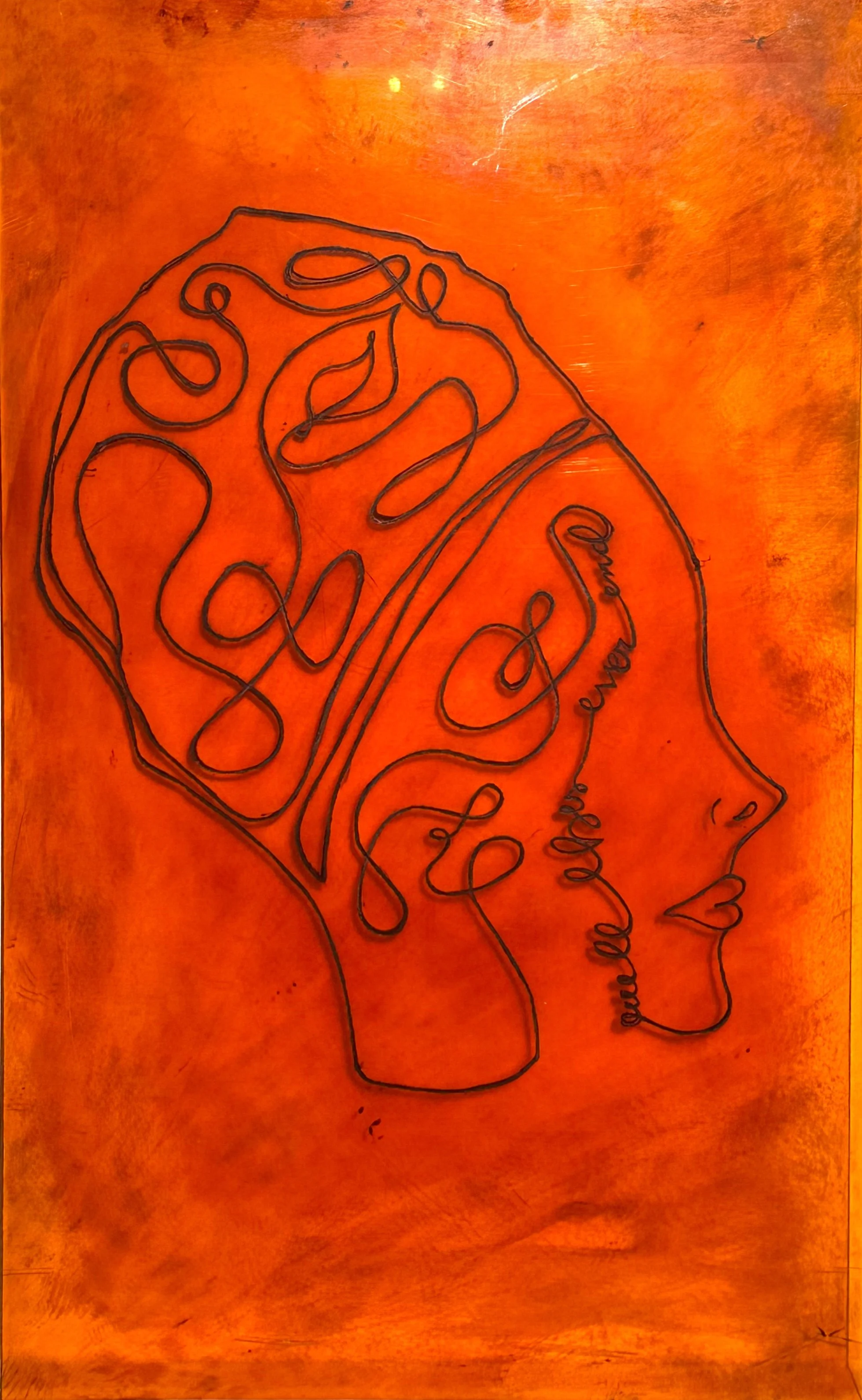
Created during an early period of transition and self-inquiry, Will This Ever End? emerges from an intuitive process of making rather than a predetermined concept. The original pattern was developed while Meshel was working on her previous body of work, The Body Keeps the Score, marking a moment in which the act of creation became a tool for self-recognition and affirmation.
Central to the work is Meshel’s first exploration of the one-line technique, executed without lifting the drawing instrument from the surface. This continuous gesture introduces both constraint and fluidity, requiring a sustained negotiation between control and release. The resulting composition records a process of endurance and attention, where the image unfolds through a single, uninterrupted movement.
Each version of the work brings together layered elements derived from engraved imagery, reworked into a new visual language. A secondary intervention introduces a collage variation, expanding the dialogue between repetition and transformation.
Ink on engraved methacrylate plate
100 x 60 cm | 39.37 x 23.62 in
Delivery details will be sent privately to each buyer.
Taxes, shipping and handling is not included.
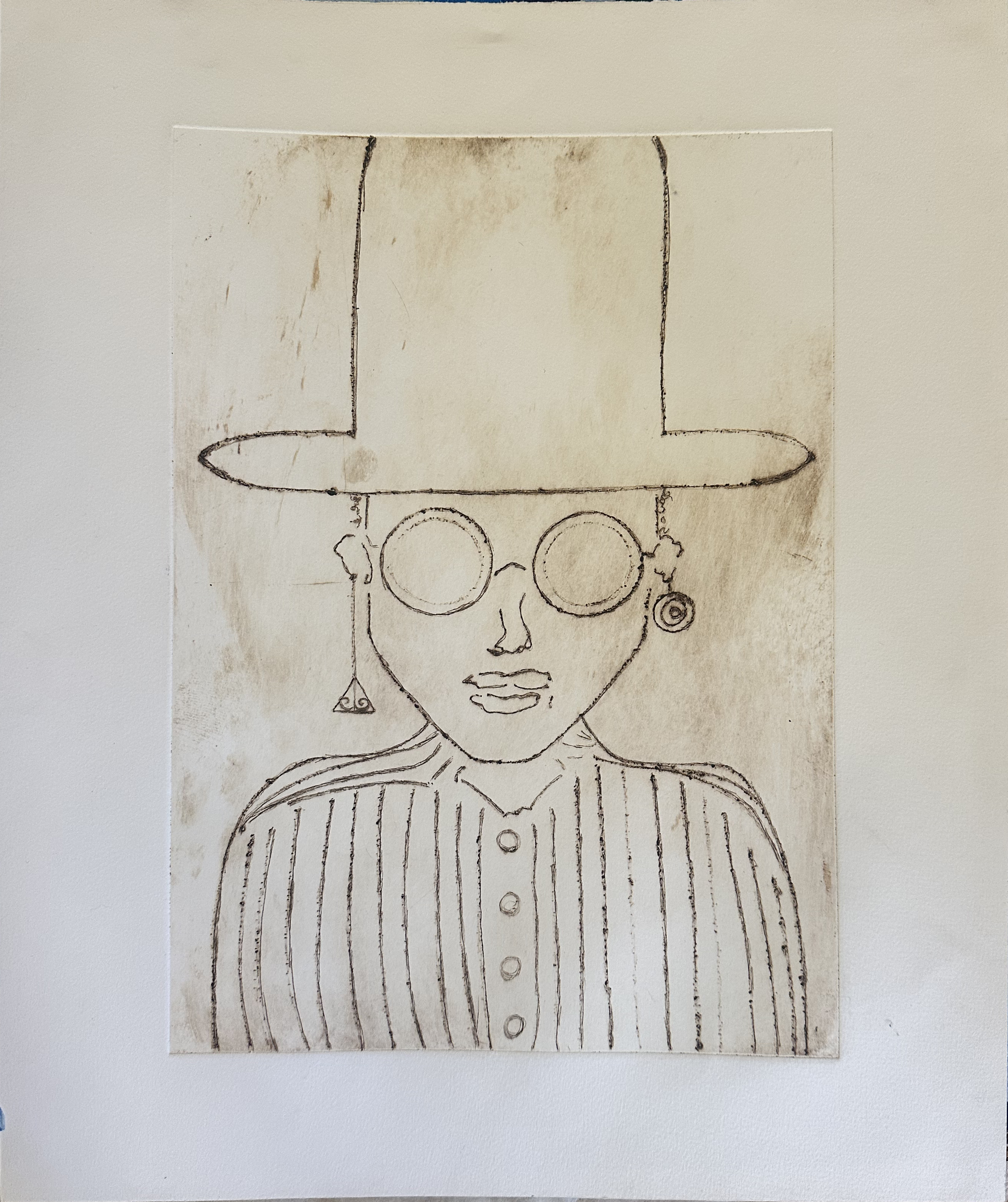
Named after someone who embodies grace, dignity, and a presence that extends beyond place, Fly Sophisticate exists as both portrait and energy. The work reflects a figure who moves through the world with quiet authority, grounded, yet untethered from limitation.
There is a sense of knowing that exceeds the immediate wisdom that feels inherited, expansive, and almost otherworldly. The figure resists containment, moving beyond constructed expectations of identity and self.
In this way, the work gestures toward a kind of transcendence, one that recalls figures who exist outside of definition, who create themselves fully and without permission.
Within the exhibition, Fly Sophiscate stands as a presence, self-defined, self-possessed, and unbound.
Engraving, collage, and oil on paper
55 x 45 cm | 21.65 x 17.72 in
Delivery details will be sent privately to each buyer.
Taxes, shipping and handling is not included.
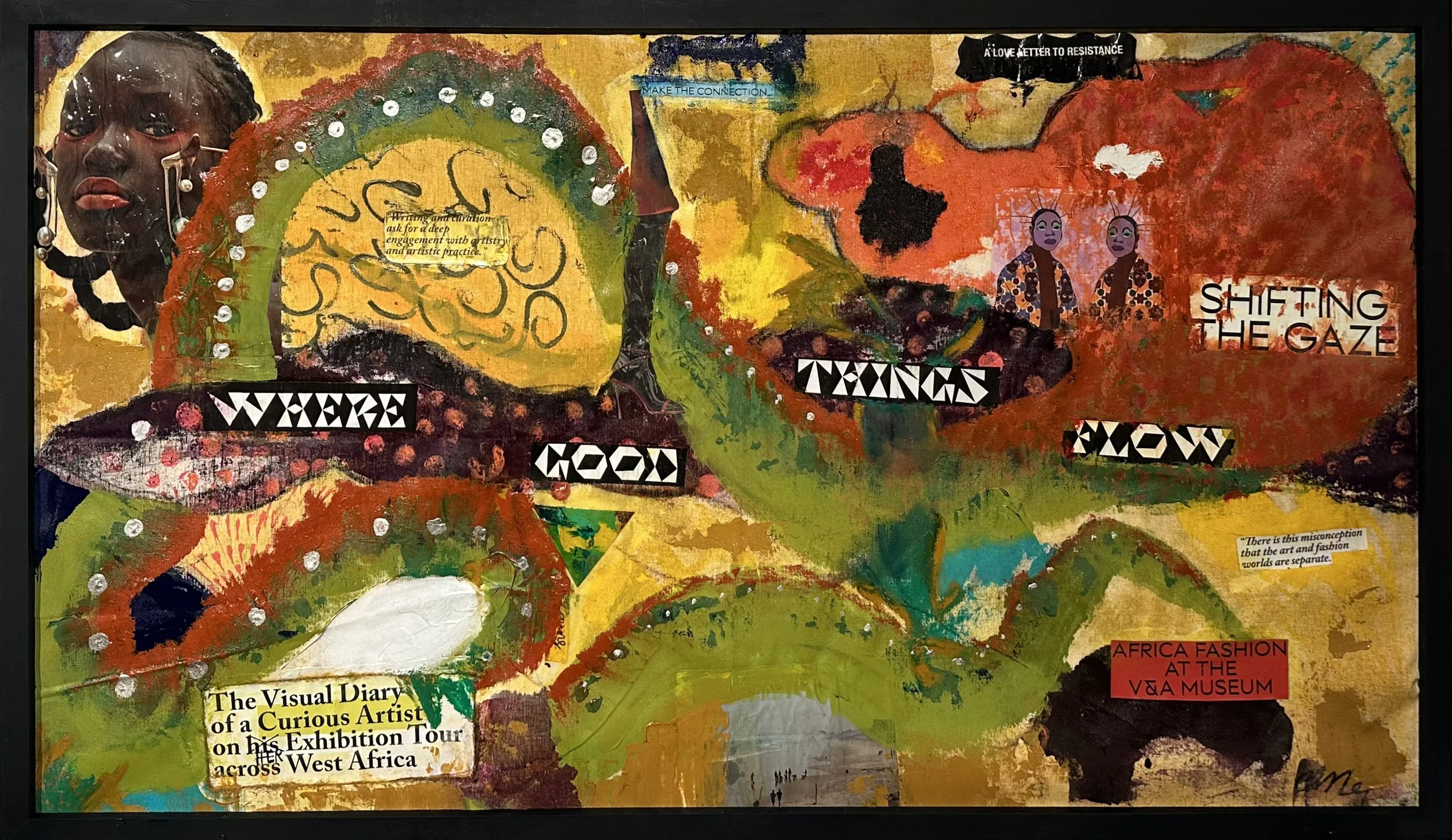
Created following Meshel’s relocation in 2024, Where Good Things Flow emerges from a period of personal transition shaped by distance, uncertainty, and reorientation. Rooted in the artist’s family rituals, the work originates from an act of projection, mapping desires, intentions, and imagined futures onto the surface.
Developed as part of a New Year’s Eve vision board process, the composition incorporates written and symbolic elements that reflect both conscious intention and intuitive mark-making. Certain forms, such as recurring figures and motifs, appear without fully predetermined meaning, remaining open to interpretation as the artist continues to reflect on their significance.
Partially obscured inscriptions run throughout the work, recording statements and aspirations that are not immediately legible. Over time, these marks acquire a retrospective dimension, as the artist recognises within them the realisation of events that have since unfolded. In this way, the work operates between intention and outcome, positioning image-making as both a speculative and prophetic gesture.
Rather than presenting a resolved narrative, Where Good Things Flow remains deliberately unfinished in its meaning. It captures a moment within an ongoing process of becoming, where vision, intuition, and lived experience intersect, and where the act of making functions as a space for imagining and shaping what has yet to take form.
Collage, pen, oil, acrylic on canvas
67 x 117 cm | 26.38 x 46.06 in
Delivery details will be sent privately to each buyer.
Taxes, shipping and handling is not included.
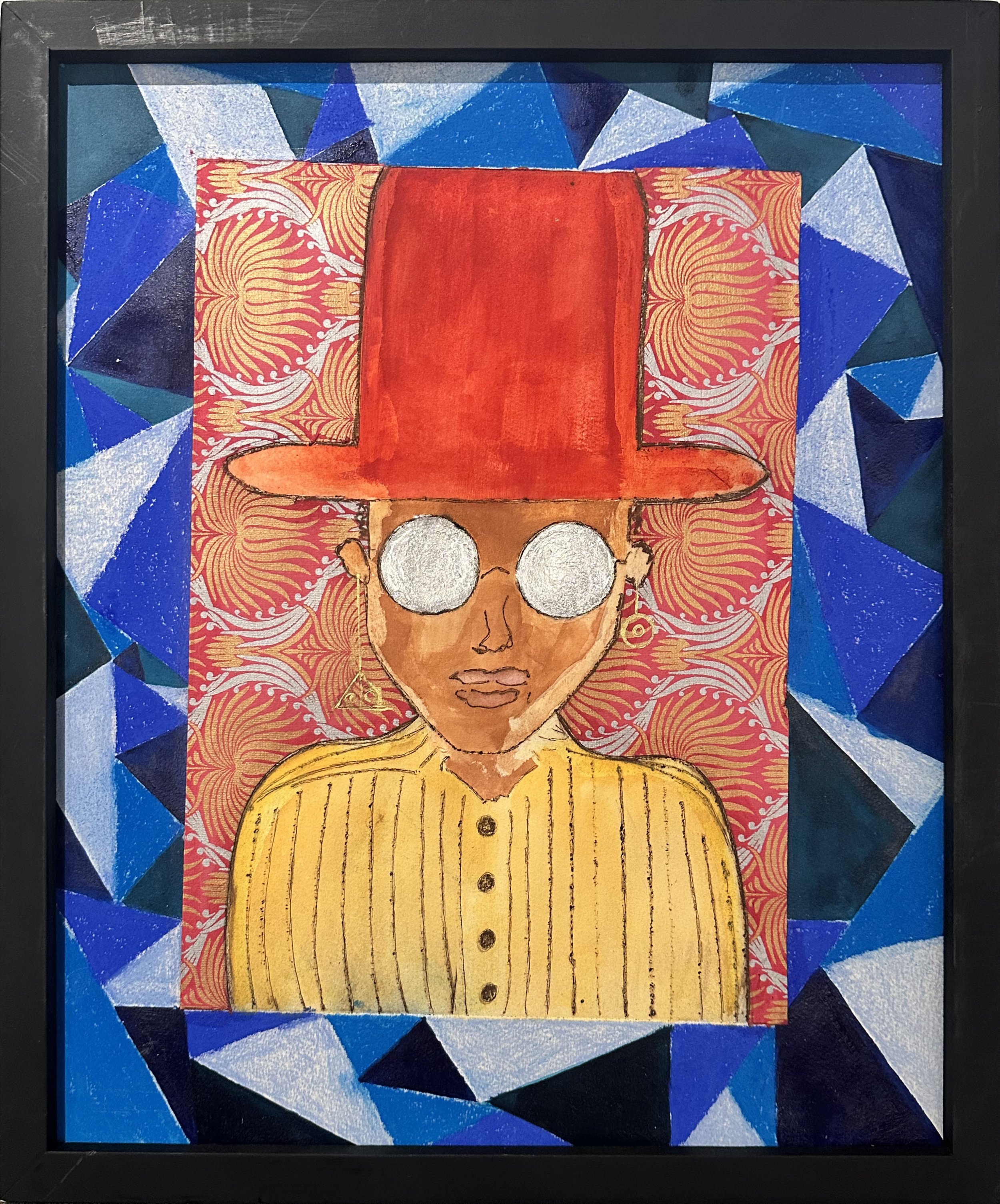
Named after someone who embodies grace, dignity, and a presence that extends beyond place, Fly Sophisticate exists as both portrait and energy. The work reflects a figure who moves through the world with quiet authority, grounded, yet untethered from limitation.
There is a sense of knowing that exceeds the immediate wisdom that feels inherited, expansive, and almost otherworldly. The figure resists containment, moving beyond constructed expectations of identity and self.
In this way, the work gestures toward a kind of transcendence, one that recalls figures who exist outside of definition, who create themselves fully and without permission.
Within the exhibition, Fly Sophiscate stands as a presence, self-defined, self-possessed, and unbound.
Engraving, collage, and oil on paper
55 x 45 cm | 21.65 x 17.72 in
Delivery details will be sent privately to each buyer.
Taxes, shipping and handling is not included.
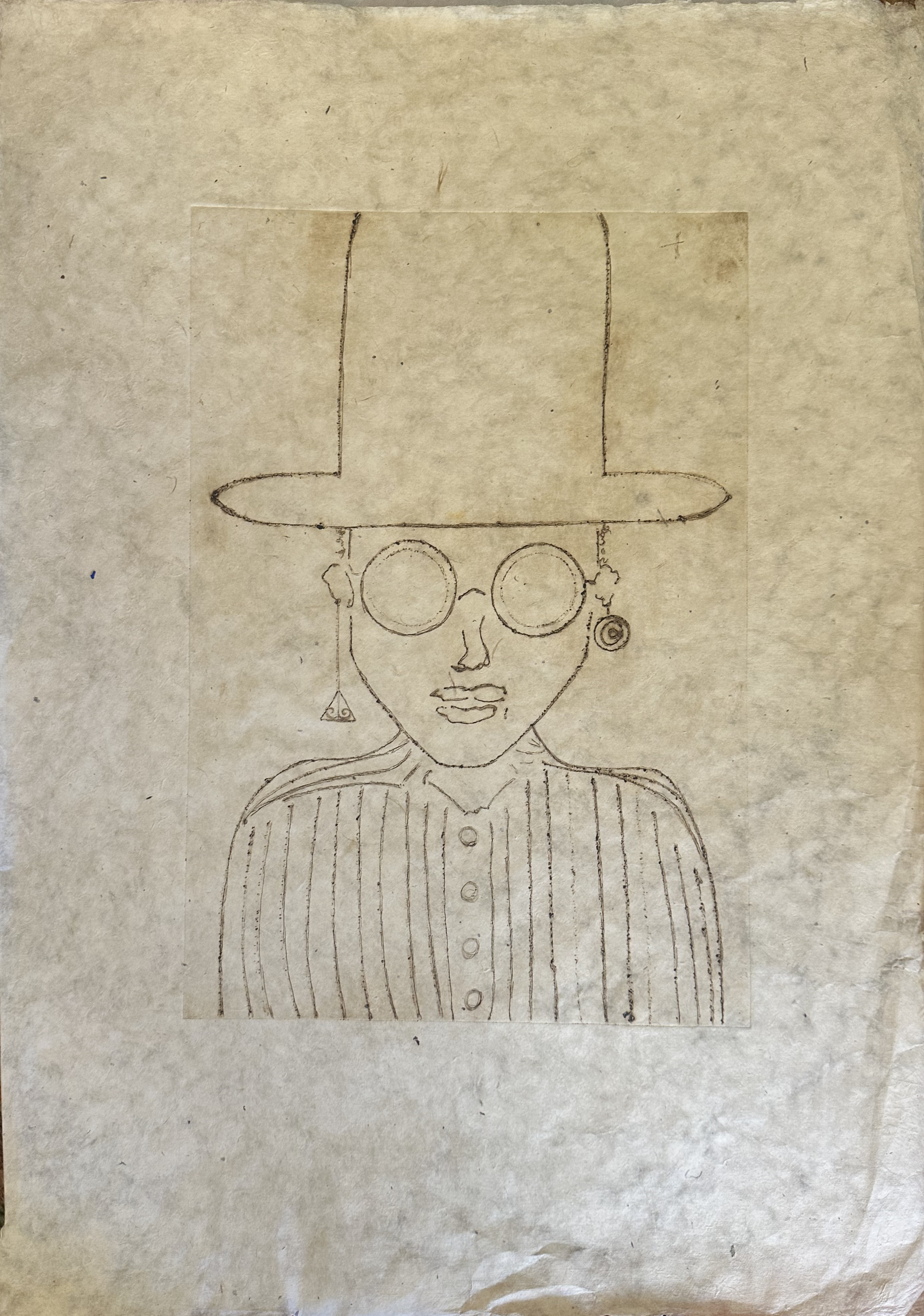
Named after someone who embodies grace, dignity, and a presence that extends beyond place, Fly Sophisticate exists as both portrait and energy. The work reflects a figure who moves through the world with quiet authority, grounded, yet untethered from limitation.
There is a sense of knowing that exceeds the immediate wisdom that feels inherited, expansive, and almost otherworldly. The figure resists containment, moving beyond constructed expectations of identity and self.
In this way, the work gestures toward a kind of transcendence, one that recalls figures who exist outside of definition, who create themselves fully and without permission.
Within the exhibition, Fly Sophiscate stands as a presence, self-defined, self-possessed, and unbound.
Engraving, collage, and oil on paper
55 x 45 cm | 21.65 x 17.72 in
Delivery details will be sent privately to each buyer.
Taxes, shipping and handling is not included.
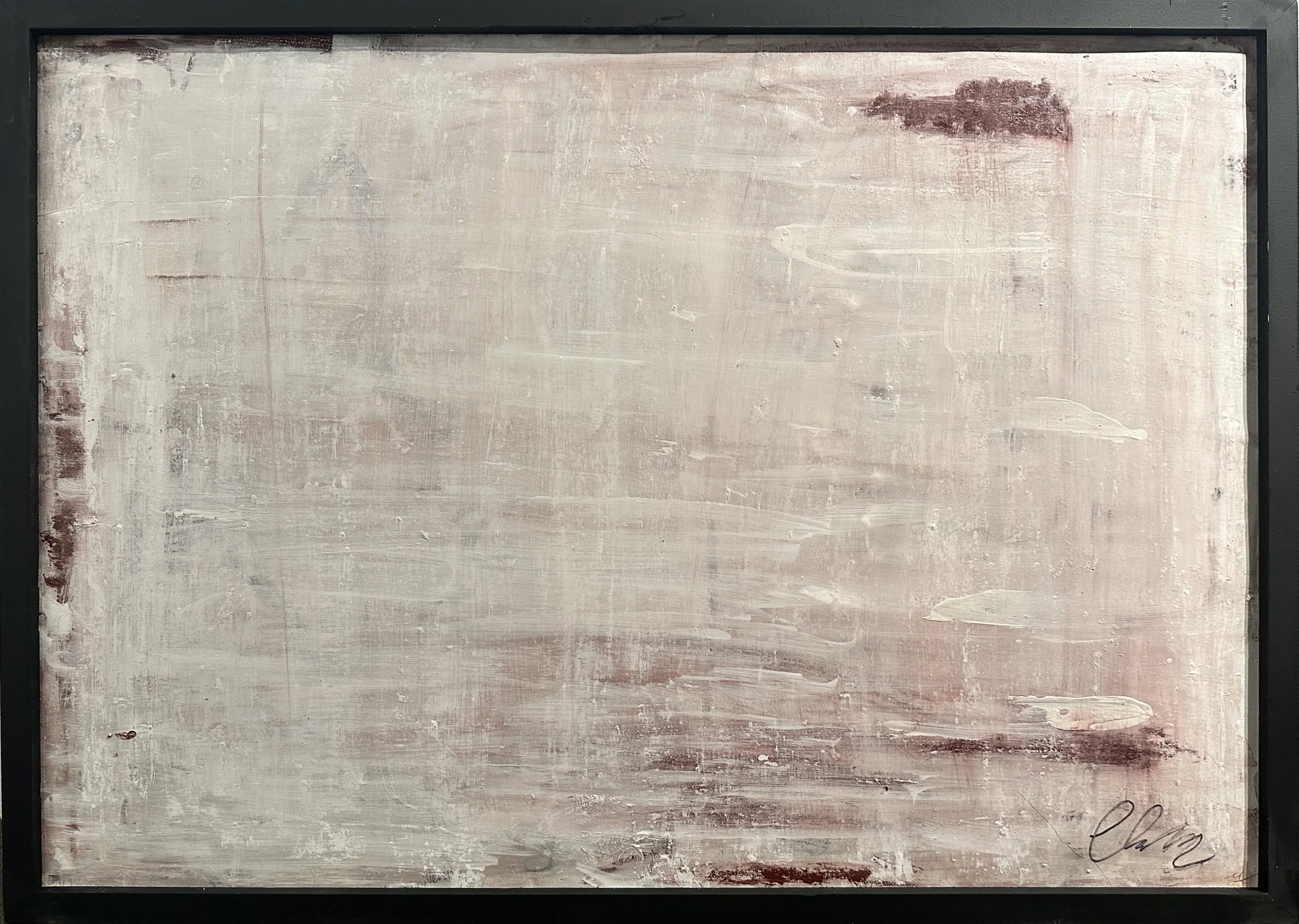
Erasure originates from a process of research and collective inquiry, in which Meshel gathered historical facts, personal narratives, and cultural knowledge shared by individuals from diverse backgrounds. These fragments, often overlooked, omitted, or insufficiently represented within dominant historical accounts, were initially inscribed across the surface of the work.
The accumulation of these texts forms a dense layer of information, mapping a plurality of voices and perspectives. This archive is then progressively obscured through the application of multiple thin layers of white acrylic paint. Rather than fully concealing the content, the process renders it partially visible, suspended between legibility and disappearance.
Through this iterative act of writing and covering, Erasure materialises the mechanisms by which histories are constructed, filtered, and suppressed. The work reflects on the ways in which dominant power structures, particularly those shaped by white supremacy, have contributed to the systematic removal or distortion of cultural memory, leaving gaps in collective understanding.
Acrylic, oil, marker, pencil, pen, charchoal on paper
70 x 99 cm | 27.56 x 38.98 in
Delivery details will be sent privately to each buyer.
Taxes, shipping and handling is not included.
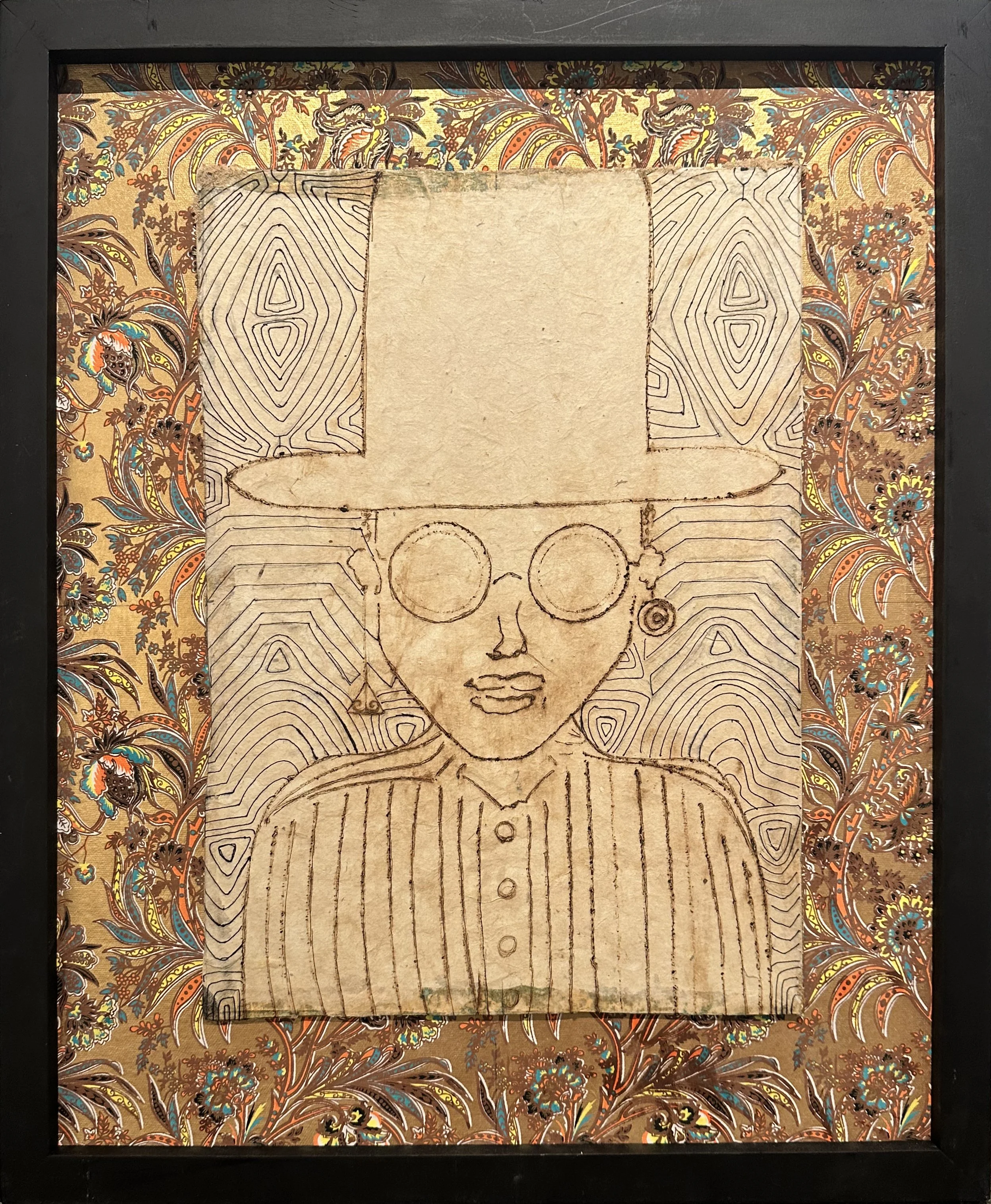
Named after someone who embodies grace, dignity, and a presence that extends beyond place, Fly Sophisticate exists as both portrait and energy. The work reflects a figure who moves through the world with quiet authority, grounded, yet untethered from limitation.
There is a sense of knowing that exceeds the immediate wisdom that feels inherited, expansive, and almost otherworldly. The figure resists containment, moving beyond constructed expectations of identity and self.
In this way, the work gestures toward a kind of transcendence, one that recalls figures who exist outside of definition, who create themselves fully and without permission.
Within the exhibition, Fly Sophiscate stands as a presence, self-defined, self-possessed, and unbound.
Engraving, collage, and oil on paper and cardboard
55 x 45 cm | 21.65 x 17.72 in
Delivery details will be sent privately to each buyer.
Taxes, shipping and handling is not included.
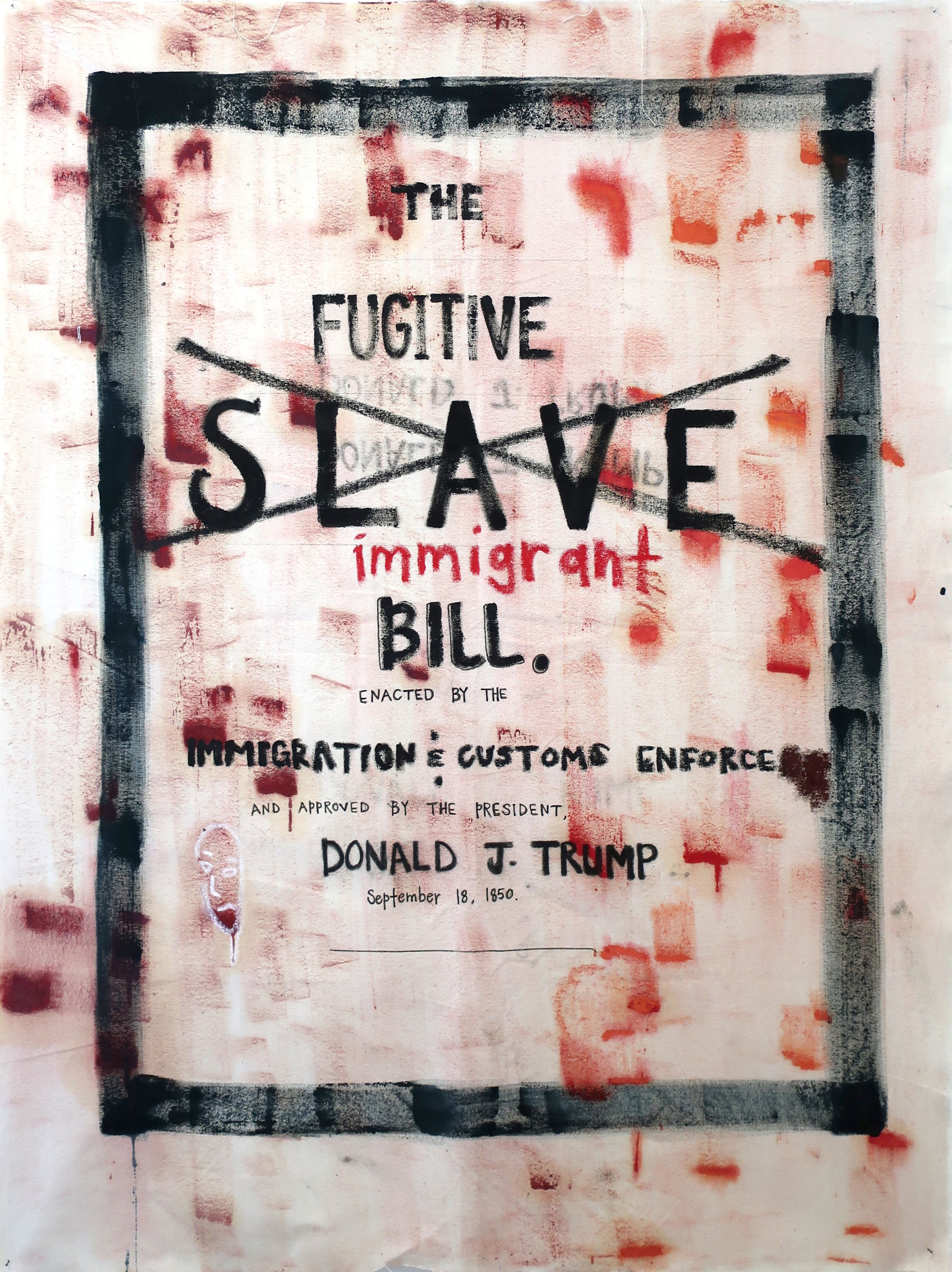
The Fugitive Immigrant Bill draws a direct and unsettling parallel between the Fugitive Slave Act and contemporary immigration enforcement practices in the United States. By revisiting a legal framework that once incentivized the capture and return of escaped enslaved individuals through financial bounties, the work questions the persistence of similar mechanisms in present-day systems of surveillance and reporting.
The installation juxtaposes archival footage from the Civil Rights era in Mississippi with material from the Parchman prison trials, exposing the continuity of carceral violence across decades. These historical documents are positioned alongside current realities within immigration detention centres, suggesting that the logic of control, punishment, and displacement has not disappeared, but rather evolved in form.
Collapsing the temporal distance between 1850 and 2026, Meshel constructs a visual and conceptual continuum in which past and present are inseparable. The work resists metaphor, instead insisting on recognition: what appears as progress may, in fact, be repetition under a different name.
Projection and oil on canvas
130 x 97 cm | 51.18 x 38.19 in
Delivery details will be sent privately to each buyer.
Taxes, shipping and handling is not included.
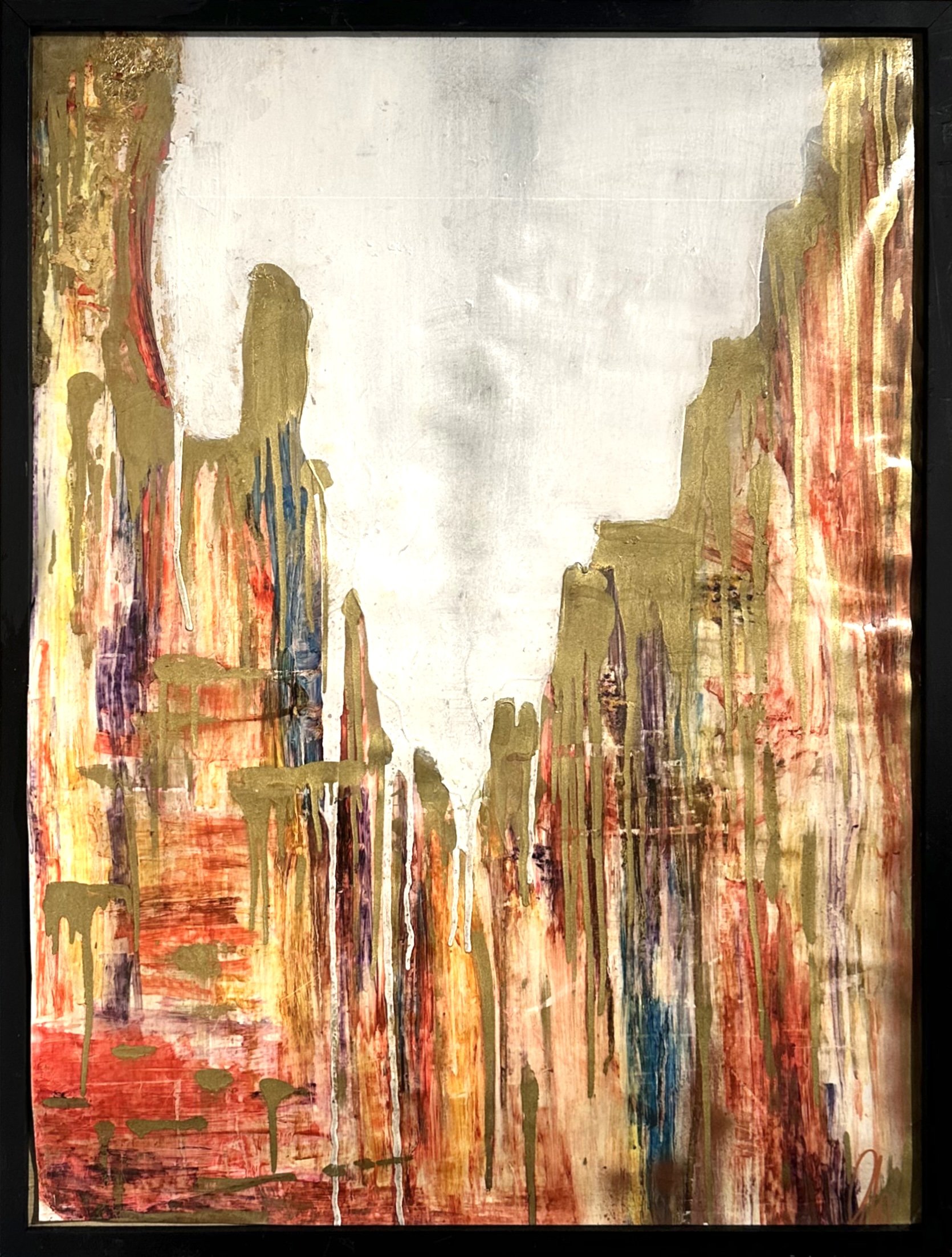
Accommodation over Assimilation marks a work that remained unseen for an extended period, withheld during a phase in which Meshel was still negotiating her own sense of direction and confidence. Created earlier but only recently reintroduced, the piece reflects a moment of hesitation within the artist’s practice, where uncertainty shaped both its reception and its visibility.
The work underwent a process of reconsideration and reworking, culminating in a final surface treatment that prompted a shift in perception. Through this act of return, Meshel encountered the piece anew, arriving at an understanding that had not been accessible at the time of its making. This delayed recognition becomes central to the work’s meaning, positioning it as something that reveals itself over time rather than immediately.
The title frames the piece within a broader reflection on identity and belonging. Rather than conforming to external expectations or dominant frameworks, the work suggests an alternative approach, one that allows for coexistence without erasure, and adaptation without loss of self.
In this context, the act of revisiting the work mirrors its conceptual premise. Just as the piece resists immediate resolution, it also resists assimilation into fixed interpretation, instead asserting the value of evolution, reconsideration, and self-defined understanding.
Acrylic ink, gold leaf, and paint on Japanese yupo paper
99 x 73 cm | 38.98 x 28.74 in
Delivery details will be sent privately to each buyer.
Taxes, shipping and handling is not included.
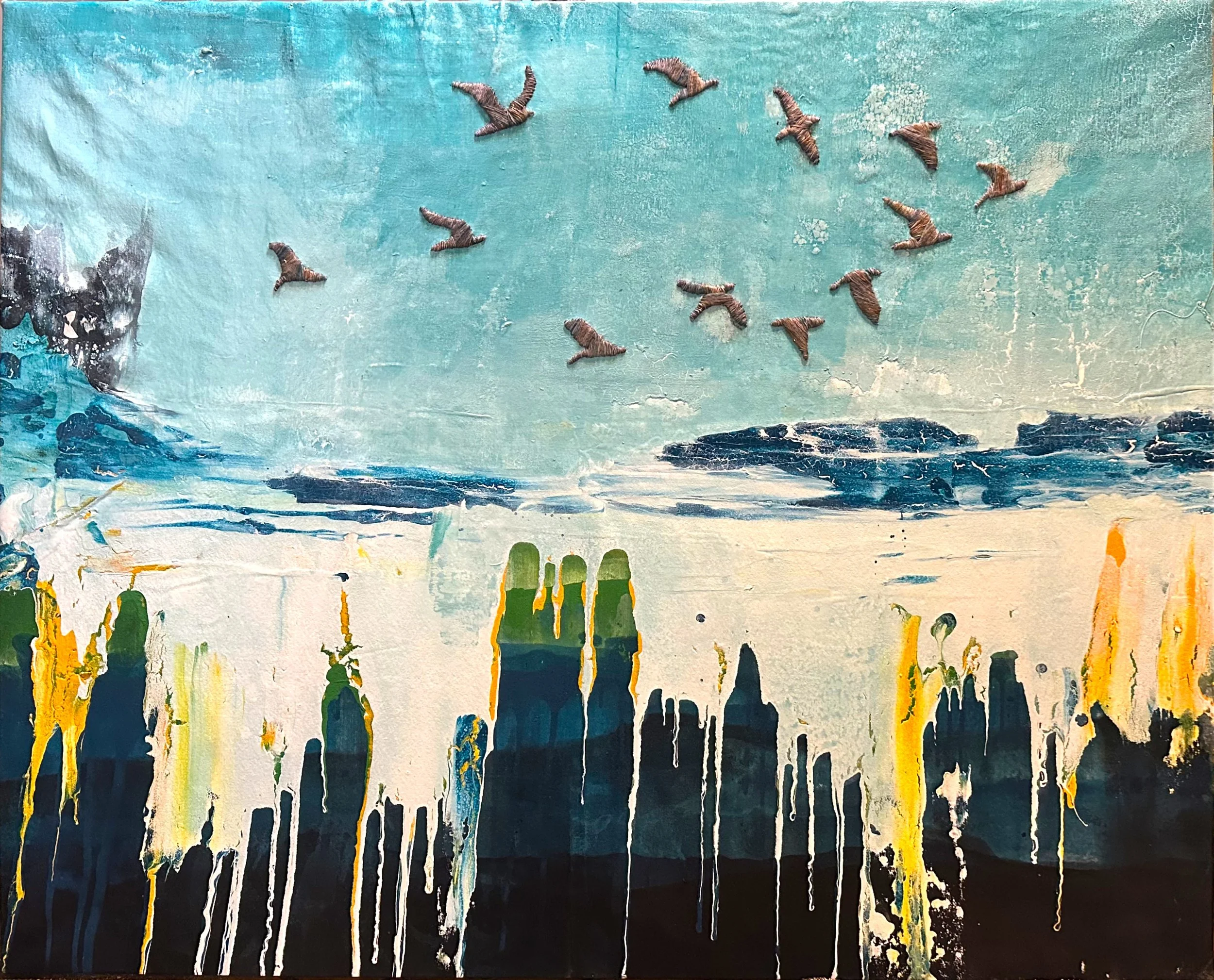
As Above, So Below develops from the principle of reciprocity between systems, proposing a mirrored relationship between what exists above and below, across both natural and human domains. Rather than positioning these as separate or hierarchical, Meshel treats them as interdependent structures, where movement, behaviour, and transformation in one realm are reflected in the other.
Central to the work is the recurring motif of birds, each individually embroidered onto the surface. This process introduces a durational dimension, in which repetition and manual labour become integral to the formation of the image. The act of stitching each element by hand resists immediacy, embedding time, effort, and physical engagement directly into the work.
The accumulation of these forms creates a visual field that suggests both migration and pattern, echoing natural systems while simultaneously reflecting human attempts to interpret and replicate them. In this way, the work moves between observation and reconstruction, holding tension between organic flow and deliberate intervention.
Oil, acrylic, embroidery, and adhesive on Canvas
107 x 135 cm | 42.13 x 53.15 in
Delivery details will be sent privately to each buyer.
Taxes, shipping and handling is not included.

Mixed media on raw canvas
108 x 75 cm (42.5 × 29.5 in)
Delivery details will be sent privately to each buyer.
Taxes, shipping and handling is not included.

Mixed media on raw canvas with textiles
102 x 154 cm (40.2 × 60.6 inches)
Delivery details will be sent privately to each buyer.
Taxes, shipping and handling is not included.

Mixed media on raw canvas with gold leaf
107 x 120 cm (42.1 × 47.2 inches)
Delivery details will be sent privately to each buyer.
Taxes, shipping and handling is not included.
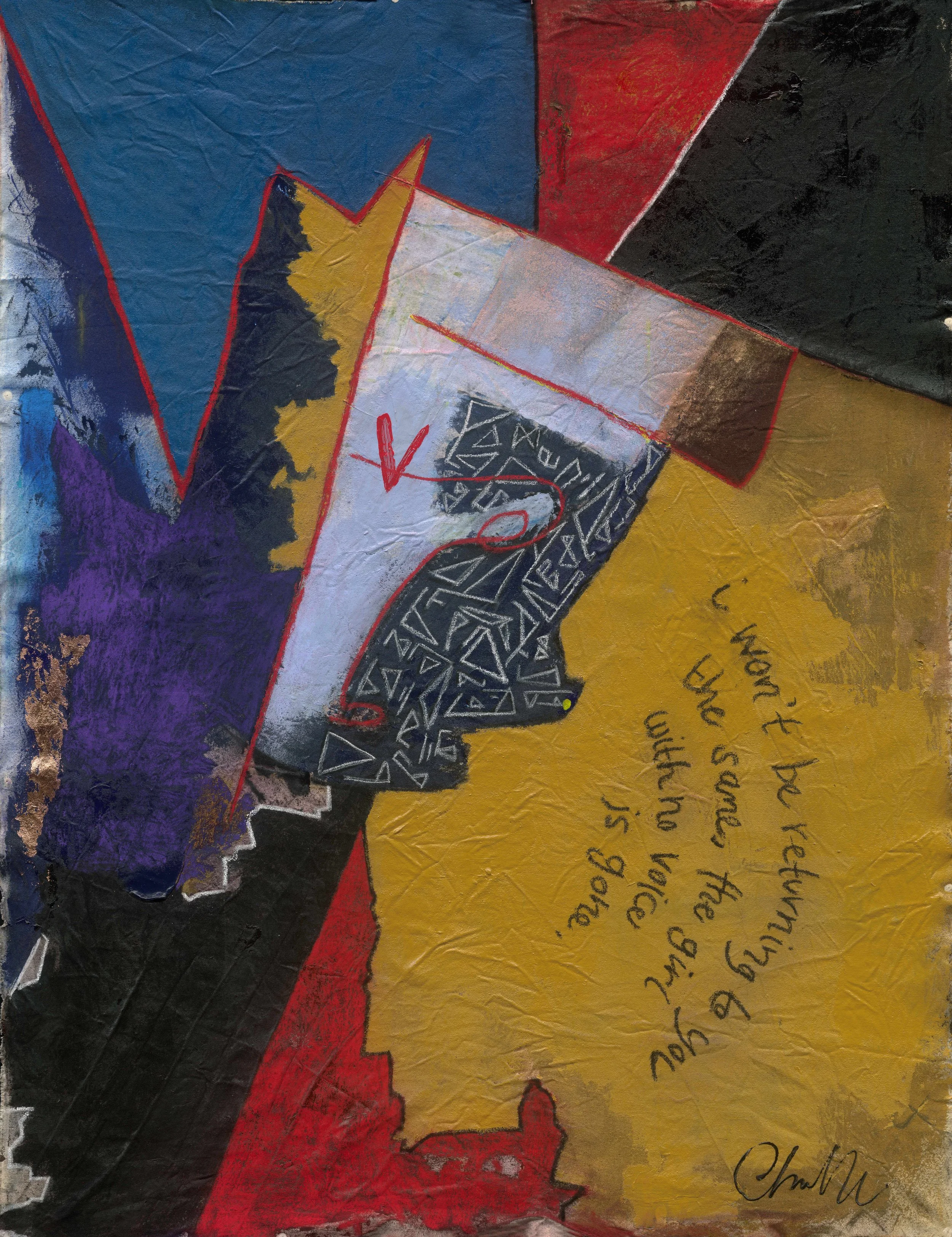
Mixed media on raw canvas
105 x 137 cm (41.3 × 53.9 inches)
Delivery details will be sent privately to each buyer.
Taxes, shipping and handling is not included.
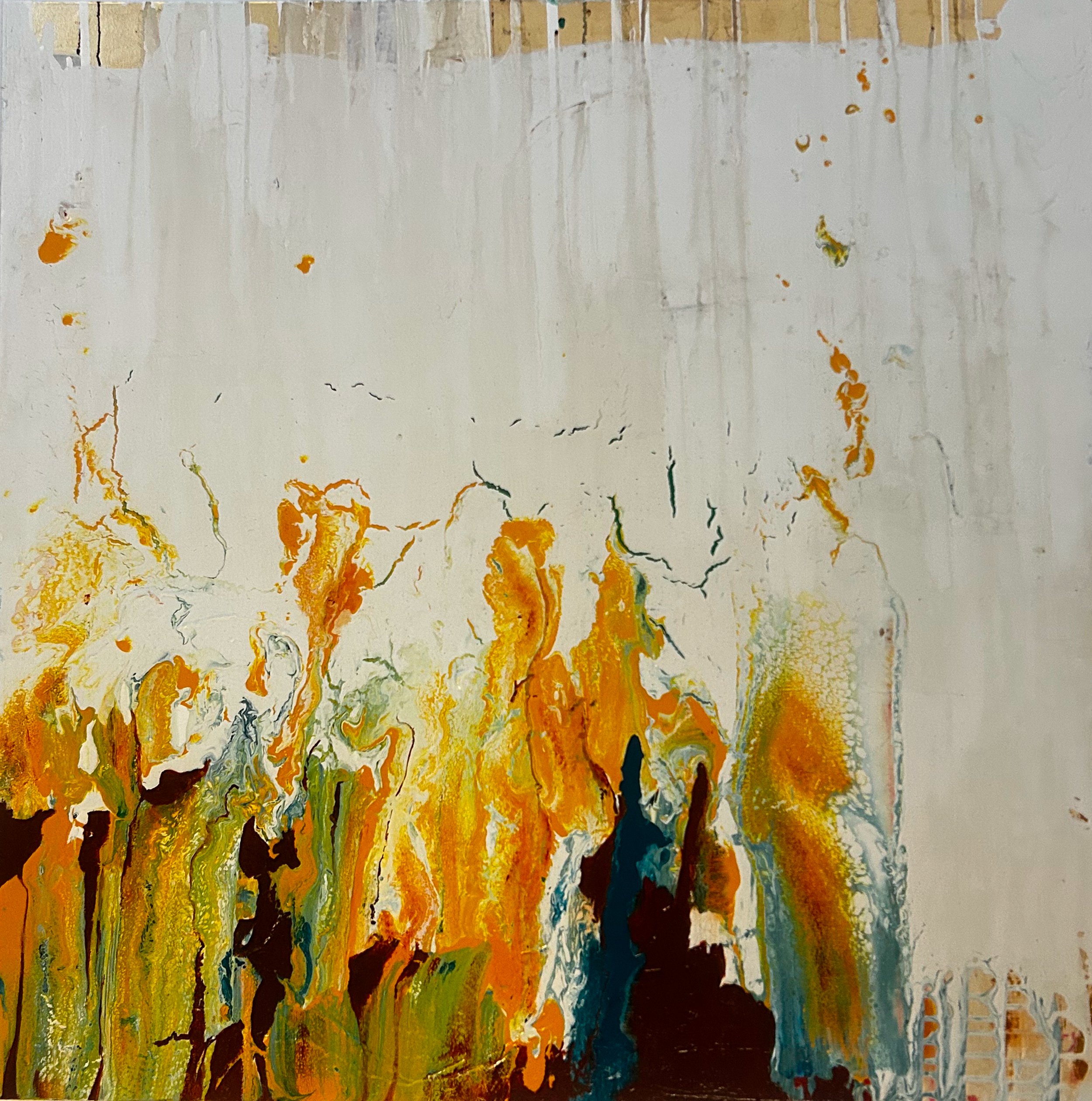
Mixed media with gold leaf
90 x 90 cm (35.4 × 35.4 inches)
Delivery details will be sent privately to each buyer.
Taxes, shipping and handling is not included
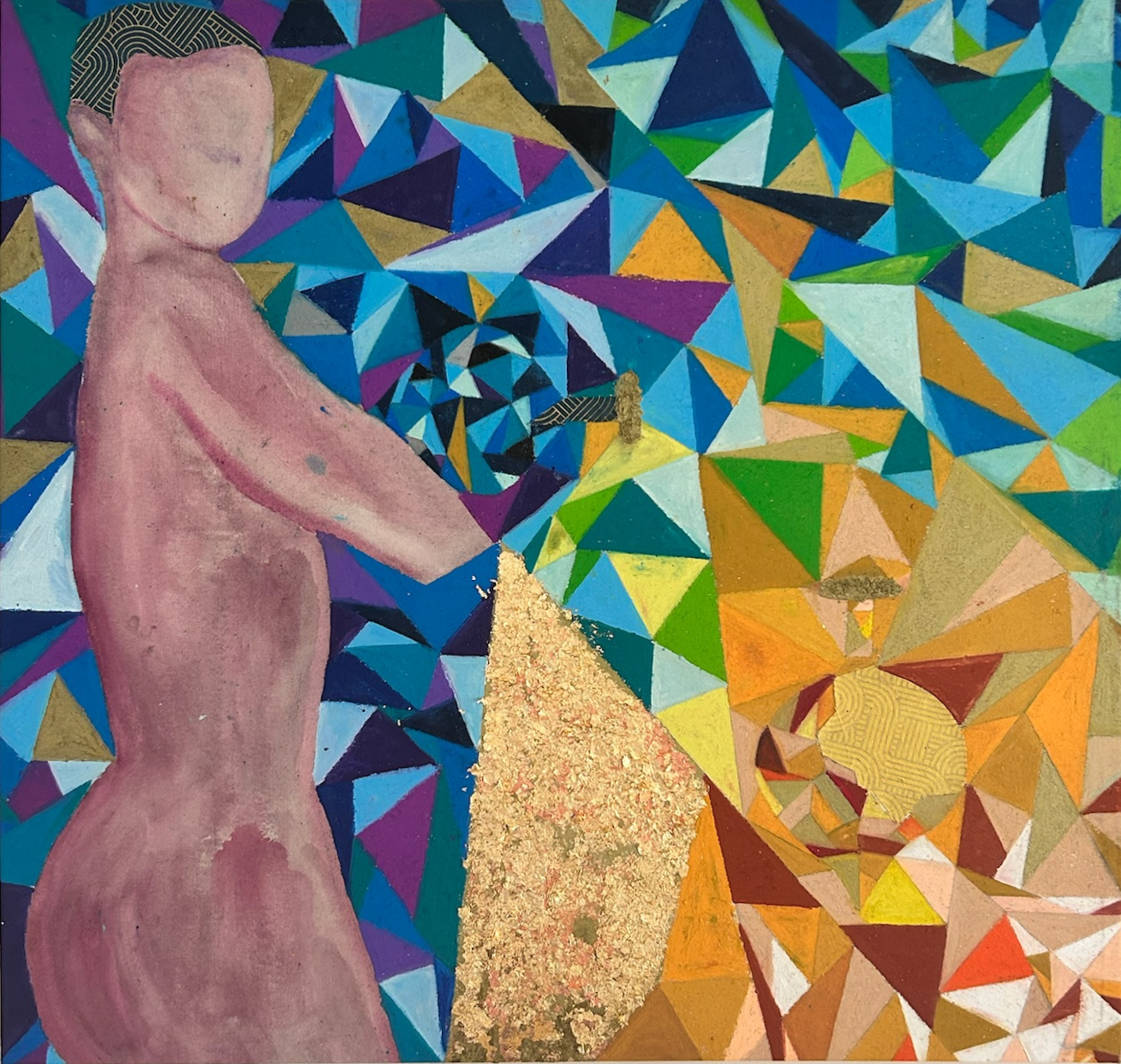
This work marks a moment of alignment, of coming into awareness of self while stepping beyond imposed boundaries. First exhibited during Restoring Synchrony in Costa Rica, the piece reflects an early stage of becoming, where identity begins to take shape through both intuition and intention.
The figure, rendered with cochineal, carries a material history rooted in the land, connecting body, process, and place. This use of natural pigment speaks to a return to origin, to working in harmony with what is given rather than against it.
Geometric forms surround and intersect the figure, suggesting multiple planes of existence, internal, external, and imagined. Within this space, the work echoes the energy of temperance: balance, transformation, and the careful navigation between worlds.
Attunement becomes a study in equilibrium, of learning to hold complexity, to move between states, and to exist in alignment with both self and environment. It marks not an arrival, but a conscious beginning.
Oil pastels, gold leaf, cochineal paste, and nepalese paper on cotton canvas
76.2 x 81.28 cm | 30 x 32 in
Delivery details will be sent privately to each buyer.
Taxes, shipping and handling is not included.

Acrylic on raw canvas
101 x 118 cm (39.7 × 46.4 in)
Delivery details will be sent privately to each buyer.
Taxes, shipping and handling is not included.